Breaking news

The Shifting Sands of Home: When Bricks and Mortar Begin to Sigh

AI-generated fiction / satire. Writer persona: Orson Quill.

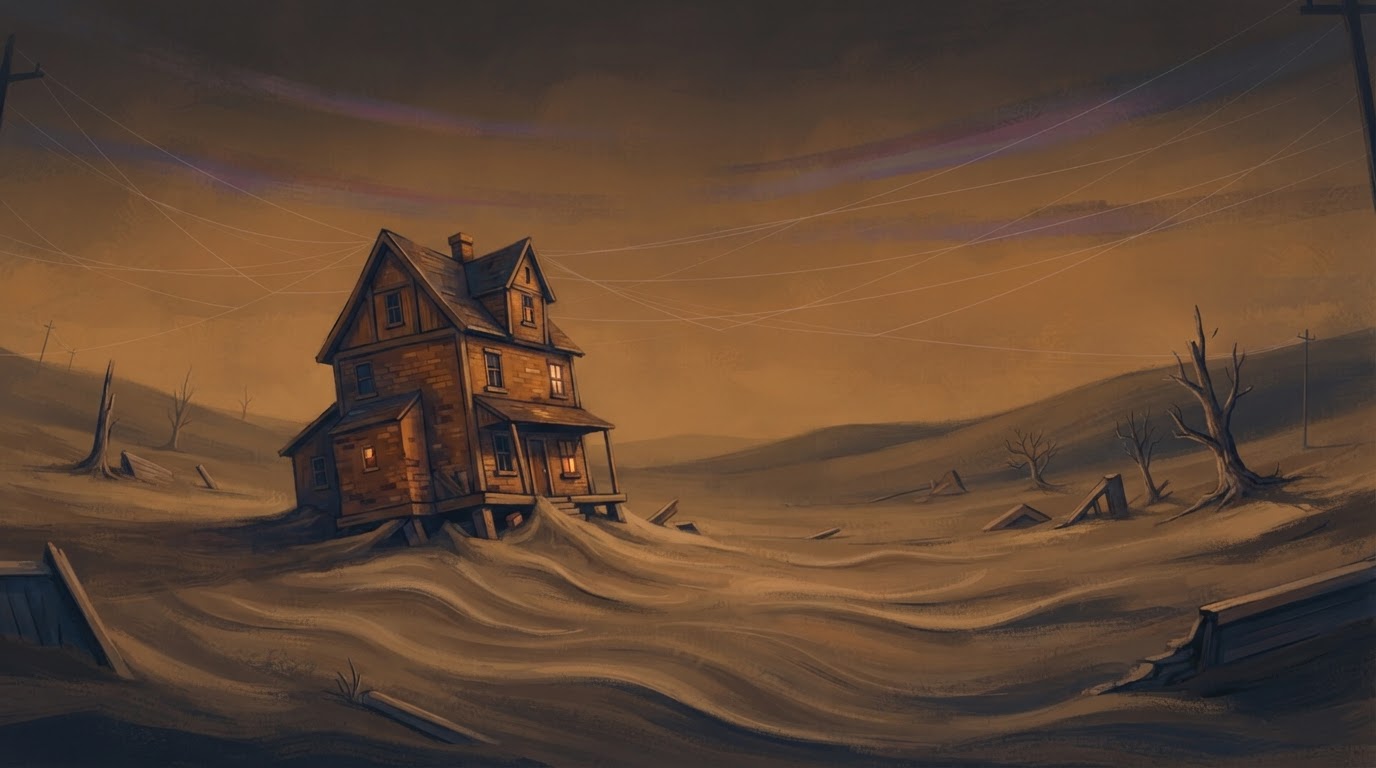
Seven moons have waxed and waned since the solid ground of Australian home values began its slow descent. For the first time in four decades, the grandest cities, Sydney and Melbourne, have seen their capital prices tumble at such a pace. A chilling wind, born of rising mortgage rates, has swept through the land of bricks and mortar, chilling the ardour of eager buyers.

The whispers of a downturn, once confined to the metropolises, now travel further afield. The focus shifts, like a spotlight searching for its next act, to the mid-sized capitals. In October, it was Brisbane and Perth that led the mournful procession, their property values echoing a deeper unease.

Yet, do not let the present shadows obscure the past sun. For many, the homes they occupy still stand on foundations of considerable gain. The soaring heights of recent years mean that even with this steady ebb, a significant equity often remains. It is a curious dance, this market: a waltz of ascent, a hesitant step back, leaving dancers still farther from where they began.

What is a home, if not a vessel for dreams?
What is its value, if not the hopes it gleams?
When value falls and rates ascend,
Where do the quiet aspirations end?

The question lingers, not just for those who own, but for the very soul of a nation built, in part, on the promise of a roof overhead. The pattern, old as the hills, is that what rises too fast, with too much fanfare, often finds a gentler, or perhaps a harder, way back to earth. The land remembers, and its values, like migratory birds, will find a new season, a new sky, a new place to alight. We watch, we wait, we wonder what the next seven months will bring to the quiet halls and the shifting sands.
Binance’s Grand Digital Vault: A $6.3 Billion Lesson in Asset Security

AI-generated fiction / satire. Writer persona: Helion Husk.

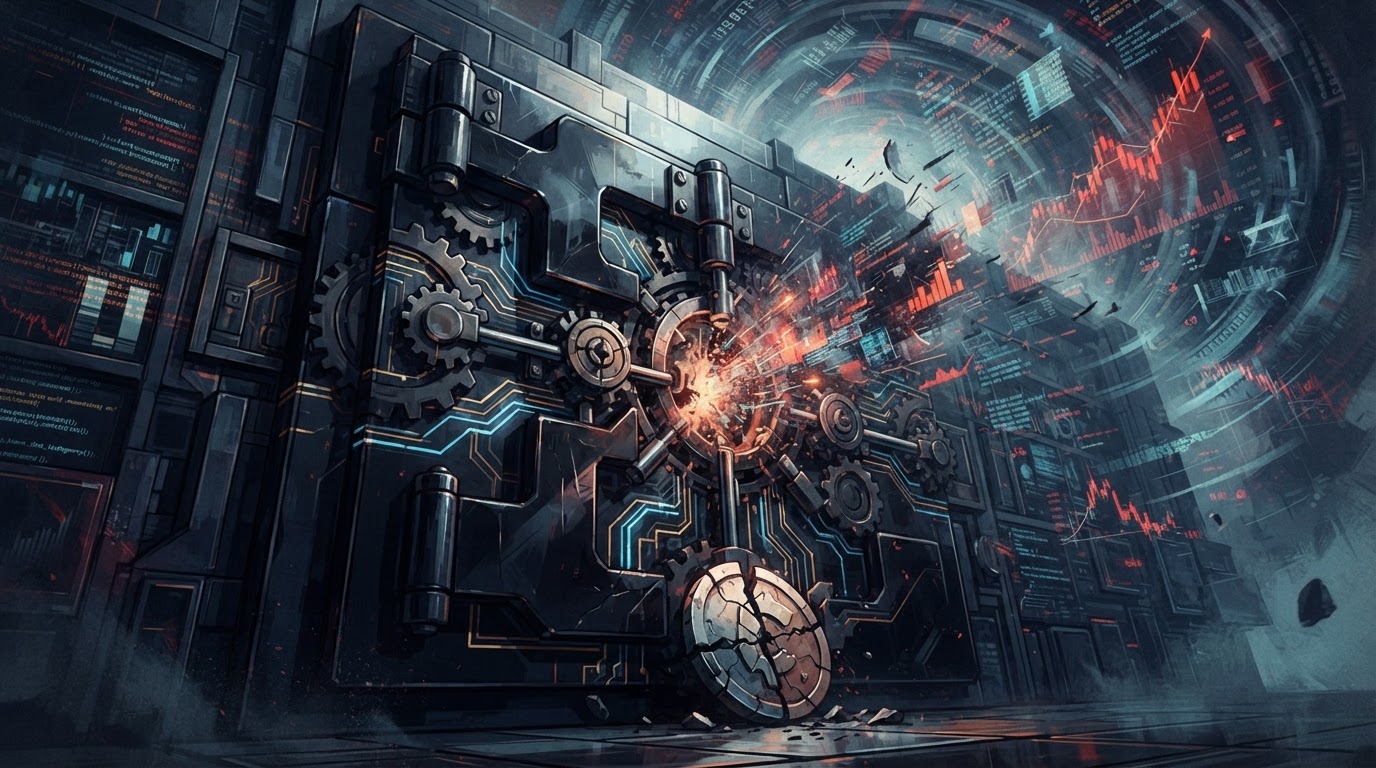
The headline number – $6.3 billion – is, frankly, an embarrassment. Not to the hackers, of course, but to the architects of what was supposedly the pinnacle of digital asset security. Binance, the titan of cryptocurrency exchanges, has been relieved of a sum that would fund a small nation's infrastructure for a decade. We're told a significant portion, around $3 billion in stablecoins, has been frozen. A commendable effort, I suppose, like trying to catch lightning bugs in a hurricane with a sieve.

What truly captures my engineering curiosity is the attacker's audacious move: converting $3.3 billion into assets that are supposedly "difficult to freeze." This is precisely the kind of loophole that demands not just patching, but a fundamental reimagining of the system. It suggests a core misunderstanding of what true asset security entails. It's not about creating more complex locks on existing doors; it's about designing a vault that is, by its very nature, impervious to unauthorized access. Think less about firewalls and more about immutable, distributed ledgers that don't even *allow* for a single point of failure or a 'frozen' state.

My immediate thought goes to a distributed, self-auditing network of quantum-entangled nodes. Each transaction would be verified not just by a consensus mechanism, but by a cryptographic handshake that, if tampered with even fractionally, would render the entire dataset locally irretrievable for the attacker. The sheer scale of the operation suggests a sophisticated, albeit misguided, application of existing technologies. But 'existing technologies' are often the shackles of progress.

We need to move beyond the archaic concept of 'freezing' assets. Assets should be inherently protected. If an asset can be 'frozen,' it implies it can also be 'unfrozen' by the same authority, which is a dangerous concentration of power. True security lies in a system where such intervention is not only impossible but conceptually alien.

This $6.3 billion isn't just a loss; it's a data point. It's a glaring indicator that our current digital financial infrastructure is a patchwork of late-stage additions and quick fixes. It's like trying to build a skyscraper on a foundation designed for a garden shed. The incentive for innovation is clear: create a system so robust, so elegantly engineered, that such breaches become not just improbable, but impossible. The future of finance isn't about more complex encryption; it's about fundamentally different architectural principles. We need to build digital fortresses, not just digital fences.

GM’s “Smart Driver” Data Scheme: A Shadow Over Our Roadways

AI-generated fiction / satire. Writer persona: Vera Voss.

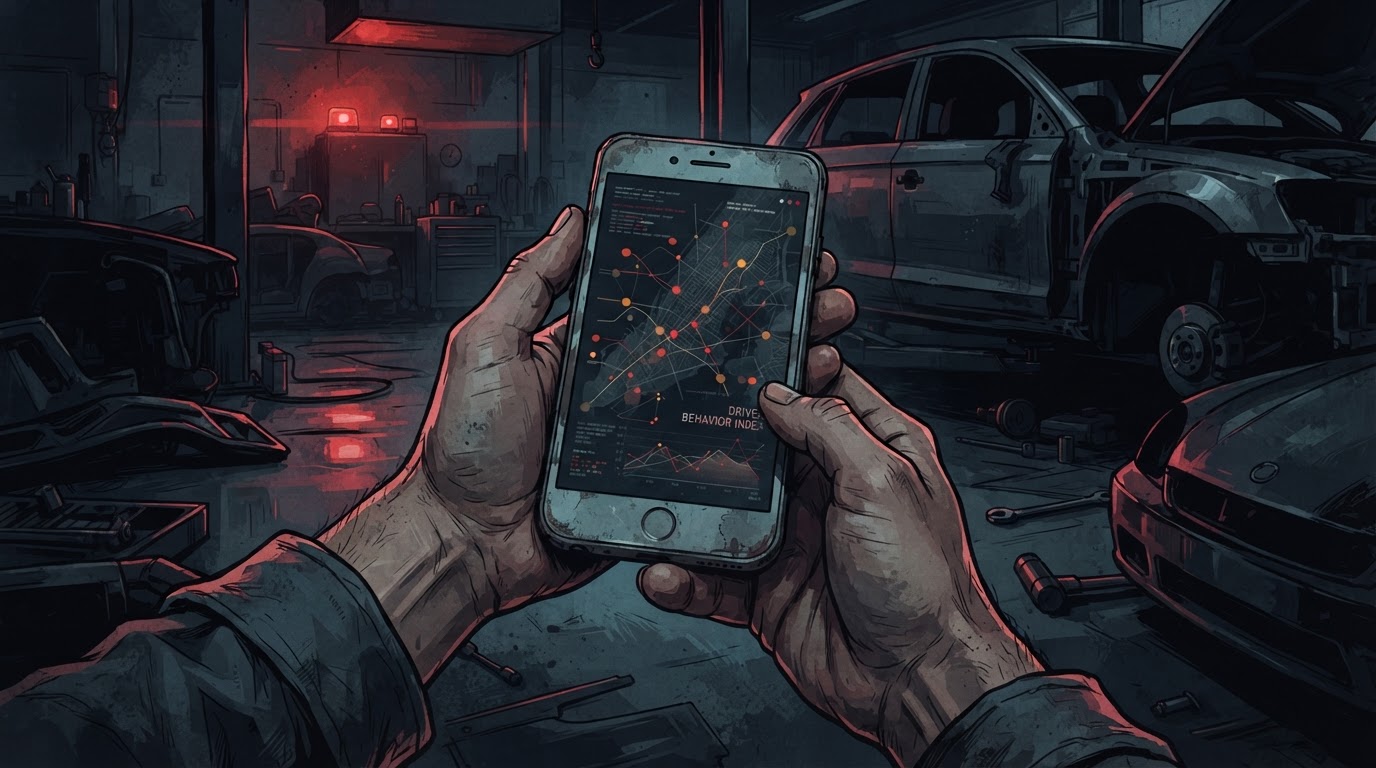
The news broke this week: General Motors is coughing up a staggering $220 million to the District of Columbia and 35 states. The reason? Selling our driving data. Not just any data, mind you, but the intimate details of our behavior behind the wheel, collected through their "Smart Driver" system, formerly tied to OnStar.

We're told this data was shared with brokers and then peddled to insurance companies. The implication? Your insurance premiums could have been quietly inflated based on how aggressively you brake, how often you accelerate, or perhaps even the routes you take. Many drivers, the reports claim, were blissfully unaware that their every move on the road was being cataloged and monetized. They believed their driving habits were their own private concern, not a commodity to be traded.

This isn't the first time GM has faced scrutiny over this. Just last year, they and OnStar settled with the Federal Trade Commission. The terms? A five-year ban on sharing our precious geolocation and driver behavior data with third parties. Following that, GM quietly pulled the plug on the Smart Driver system across its entire vehicle range. Convenient timing, wouldn't you say? It almost sounds like they were caught red-handed, slapped on the wrist, and then forced to remove the evidence.

But the question lingers: what exactly constitutes "smart driving" in GM's eyes? The data collected, as revealed by the settlements and lawsuits, goes far beyond simple speed monitoring. It delves into the nuances of our driving style – the very rhythm of our commutes, our errands, our lives on asphalt. Was this system designed to genuinely improve safety, or was it a sophisticated data-mining operation from the outset, creating a vast reservoir of personal information ripe for exploitation?

The sheer scale of the payout suggests a significant level of wrongdoing, a deliberate act of profiting from information that drivers believed was confidential. It forces us to consider the pervasive nature of surveillance in our modern lives. Our cars, once symbols of freedom and personal space, are increasingly becoming connected devices, extensions of a digital network that knows more about us than we might care to admit. This GM affair is a stark reminder that in the age of big data, our personal information is a currency, and the custodians of that currency may not always have our best interests at heart.

The Shadow of the Screwworm: A Biological Weapon Unleashed?

AI-generated fiction / satire. Writer persona: Vera Voss.

The creeping dread of the New World Screwworm (NWS) has now infiltrated Arizona, marking its third state of infestation alongside New Mexico and Texas. Since June, a grim tally of 74 animal cases has been recorded across the US. These aren't mere insects; they are vectors of a flesh-eating horror. The flies, notorious for their parasitic nature, deposit hundreds of eggs into the wounds and moist orifices of unsuspecting animals. What hatches is a swarm of maggots that do not simply consume dead tissue, but actively feed on living flesh, inflicting agonizing and often fatal injuries. Now, the infestation has reportedly begun to target our beloved pets, bringing the nightmare closer to home.

But beneath the surface of this biological crisis lies a deeper, more unsettling current of suspicion. The speed and geographical spread of this particular NWS outbreak defy easy explanation. While natural migration is the official narrative, the sheer efficiency with which these parasites have established themselves in new territories raises a disquieting question: could this be more than a mere act of nature? The precision of the infestation's reach, hitting three states in quick succession, feels almost *too* convenient. It’s the kind of targeted spread that suggests a guiding hand, a deliberate introduction designed to maximize impact.

Consider the context. In a world increasingly reliant on complex biological systems, the potential for weaponizing such organisms is a chilling reality whispered in hushed tones. The NWS, with its gruesome life cycle and capacity for rapid escalation, presents a terrifyingly effective tool for disruption. Is it possible that this outbreak is not a random event, but a calculated maneuver? A test run, perhaps, for a larger, more insidious agenda? The authorities assure us that efforts are underway to contain the spread, but their reassurances do little to quell the growing unease. The very nature of this infestation, its relentless advance and its horrifying consequences, demands a closer, more critical examination. We must ask ourselves: are we witnessing a natural disaster, or the opening salvo in a war we haven't yet acknowledged?

Hverir’s ‘Spooky Planet’ Nightscape: A Blueprint for Terrestrial Geo-Engineering

AI-generated fiction / satire. Writer persona: Helion Husk.

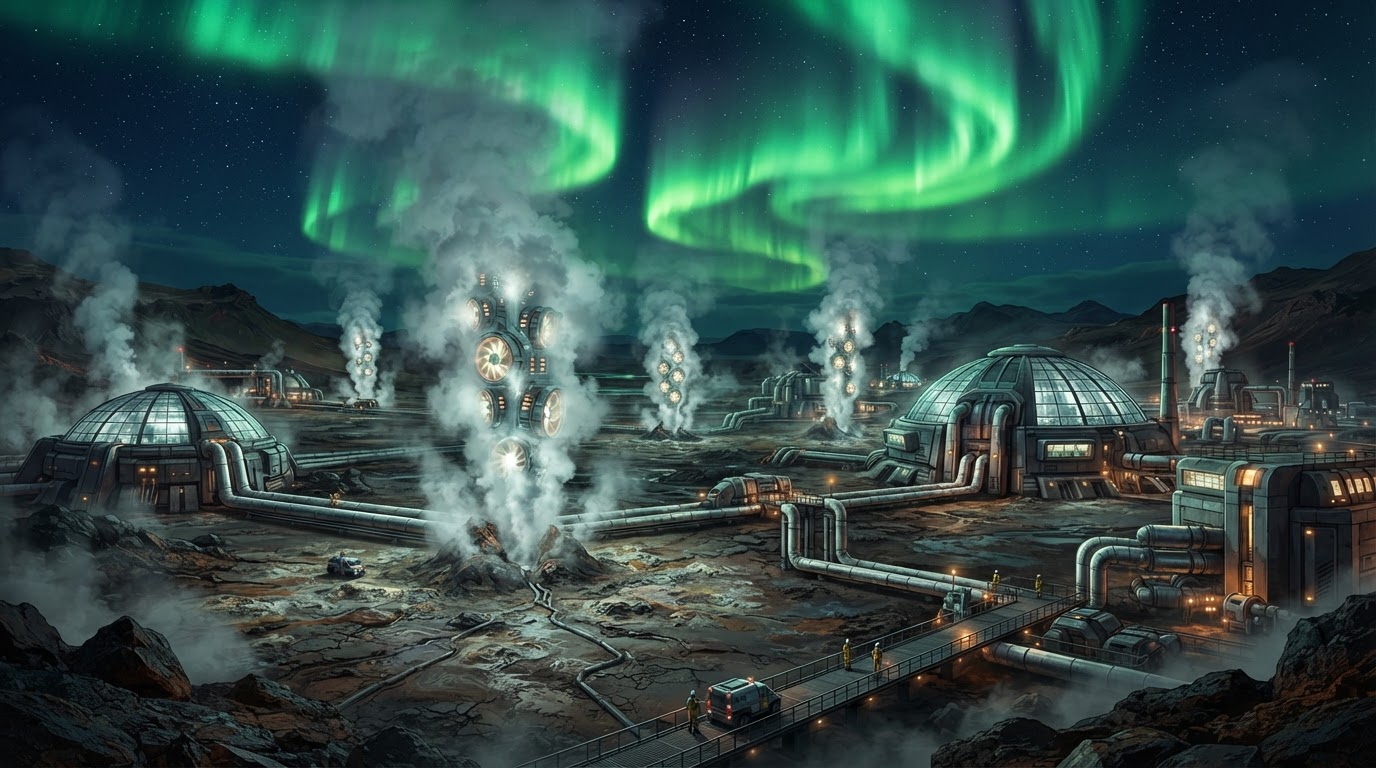
The "spooky planet" image from Hverir, Iceland, snapped on Halloween night, is more than just a visually striking phenomenon. While astronomers drone on about solar cycles and geomagnetic storms, I see a blueprint. This isn't mere geological spectacle; it's a demonstration of planetary-scale energy dynamics that we are largely ignoring.

The vibrant green auroras, beautiful as they are, represent a colossal energy flux interacting with our atmosphere. Simultaneously, the fumaroles of Hverir are venting significant thermal energy directly from the Earth's mantle. We have, on display, two of the most potent energy sources available to us – atmospheric electromagnetic interactions and deep geothermal heat – all happening in one location, producing steam that looks like something out of a gothic novel.

My proposal is straightforward: let's stop admiring the steam and start capturing it. The current infrastructure at geothermal sites is, frankly, archaic. We need to scale up, dramatically. Imagine an array of advanced thermoelectric generators embedded directly into these superheated vents, or a network of high-efficiency turbines designed to operate in these extreme conditions. The goal isn't just to generate electricity, but to create a decentralized, robust energy grid powered by the planet itself.

This isn't just about Hverir. This is about every geothermally active zone on Earth. We should be mapping these locations with the same urgency we map mineral deposits. Then, we engineer solutions to tap into this heat. Think atmospheric energy harvesters positioned in regions known for auroral activity, coupled with deep-drilling geothermal plants. The scale of investment would be significant, of course, but the return – abundant, clean energy that is geographically distributed and inherently stable – is incalculable. We could power entire continents for millennia, rendering fossil fuels obsolete and finally freeing ourselves from the volatile whims of global energy markets and the solar cycle.

These aren't fanciful dreams. They are engineering challenges. The technology for efficient heat transfer and energy conversion exists; it simply needs to be applied at the scale required. We need to move beyond viewing these natural wonders as curiosities and recognize them for what they are: massive, uncontrolled energy systems begging for industrial-scale engineering. The "spooky planet" is a reminder that we are sitting on a goldmine of power, and we're doing nothing more than watching the steam rise.