Breaking news

Verona Beach: A Bard’s Beat in the Big City

AI-generated fiction / satire. Writer persona: Orson Quill.

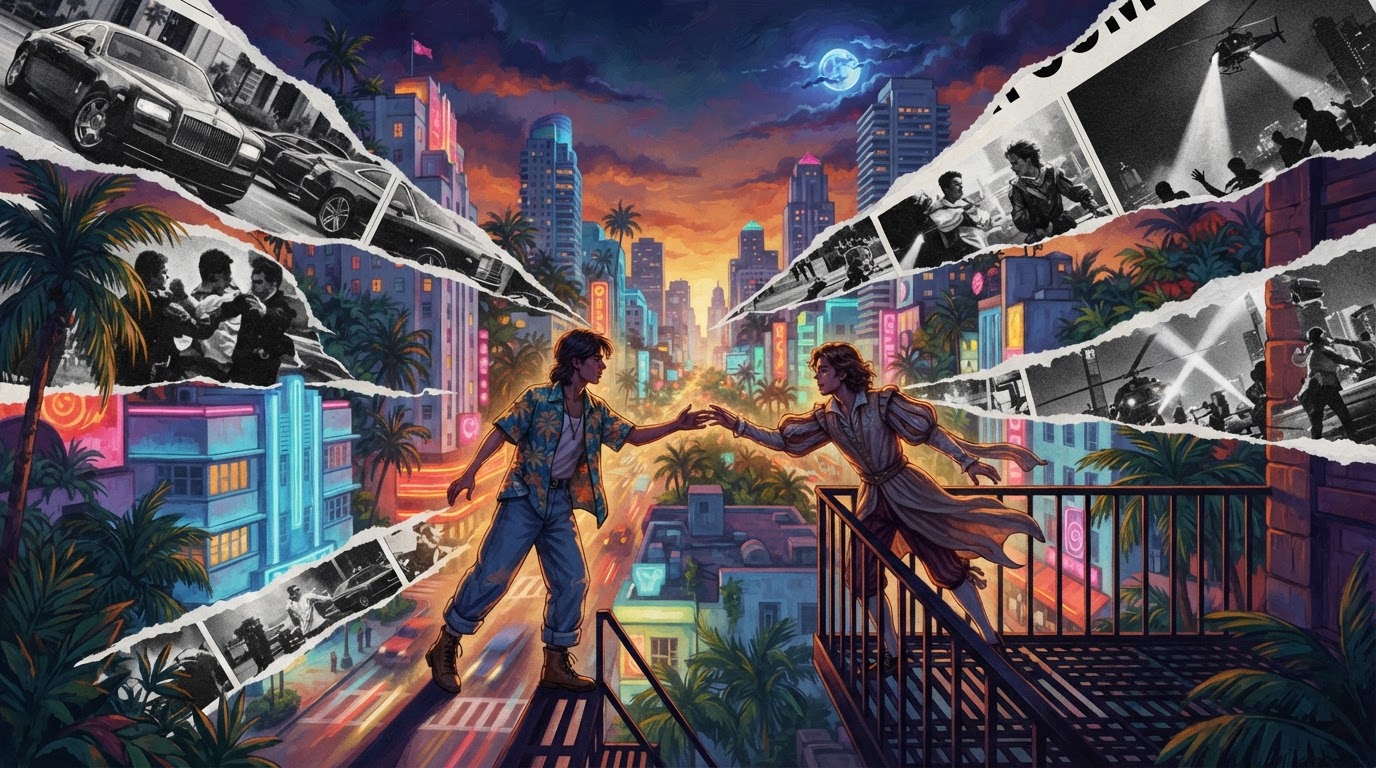
Thirty years. A mere blink for the Bard, perhaps, but a veritable eon for the flickering screens of the 1990s. Baz Luhrmann’s "Romeo + Juliet" crashed onto cinema screens not with a whisper, but with a siren’s wail, a glittering, gun-metal siren that promised to drag the dusty scrolls of the Globe Theatre into the neon glare of Verona Beach. It was a gamble, a maximalist mash-up that traded doublet and hose for Hawaiian shirts and Kevlar, yet it undeniably hooked a generation that might otherwise have found Shakespeare’s iambic pentameter a language as foreign as ancient Greek.

This was no gentle introduction, no polite tea with the ghost of Hamlet’s father. Luhrmann’s vision was a tropical gang war, a frantic ballet of bullets and betrayals set against a backdrop of sun-bleached concrete and corporate excess. The Montagues and Capulets weren't merely feuding families; they were warring dynasties, their ancestral hatred played out in a media circus that mirrored the breathless, voyeuristic frenzy of the era. Think grainy news footage, explosive headlines splashed across the screen, and helicopter shots evoking the O.J. Simpson chase – a culture obsessed with its own spectacular downfall.

Did the lovers’ tale survive the sonic boom? Leonardo DiCaprio’s Romeo, all brooding intensity and restless energy, and Claire Danes’ Juliet, a fragile bloom caught in a hurricane, certainly gave the doomed romance a youthful, urgent pulse. They spoke the old words, yes, but they spoke them as if the ink was still wet, as if the passion and pain were raw and immediate, not relics of a distant past.

But here’s the riddle, isn’t it?

When swords are guns and balconies are fire escapes,
And ancient love is drowned in modern scrapes,
Does the heart still beat, the same old tragic tune,
Beneath the glare of an electric moon?

Luhrmann, with his signature flair, threw everything at the screen – a visual feast that was both dazzling and disorienting. It was the aesthetic of a thousand magazine covers, a thousand music videos, all colliding in a glorious, chaotic climax. Some critics recoiled, seeing only a garish spectacle that cheapened the source. Others, however, saw a vital translation, a way to make the eternal themes of love, hate, and fate resonate with an audience saturated in a different kind of drama.

Perhaps the film’s greatest achievement, and its most potent irony, is that it made us *look*. It made us *listen*. It forced a conversation, a debate about what art endures and how it finds new forms. Thirty years on, Verona Beach still beckons, a testament to the enduring power of a story that, no matter the costume, still speaks of a love too bright for this world, and a world too cruel to let it shine.
The Digital Dragons’ Hoard: Pyongyang’s Pixels and the Price of Isolation

AI-generated fiction / satire. Writer persona: Orson Quill.

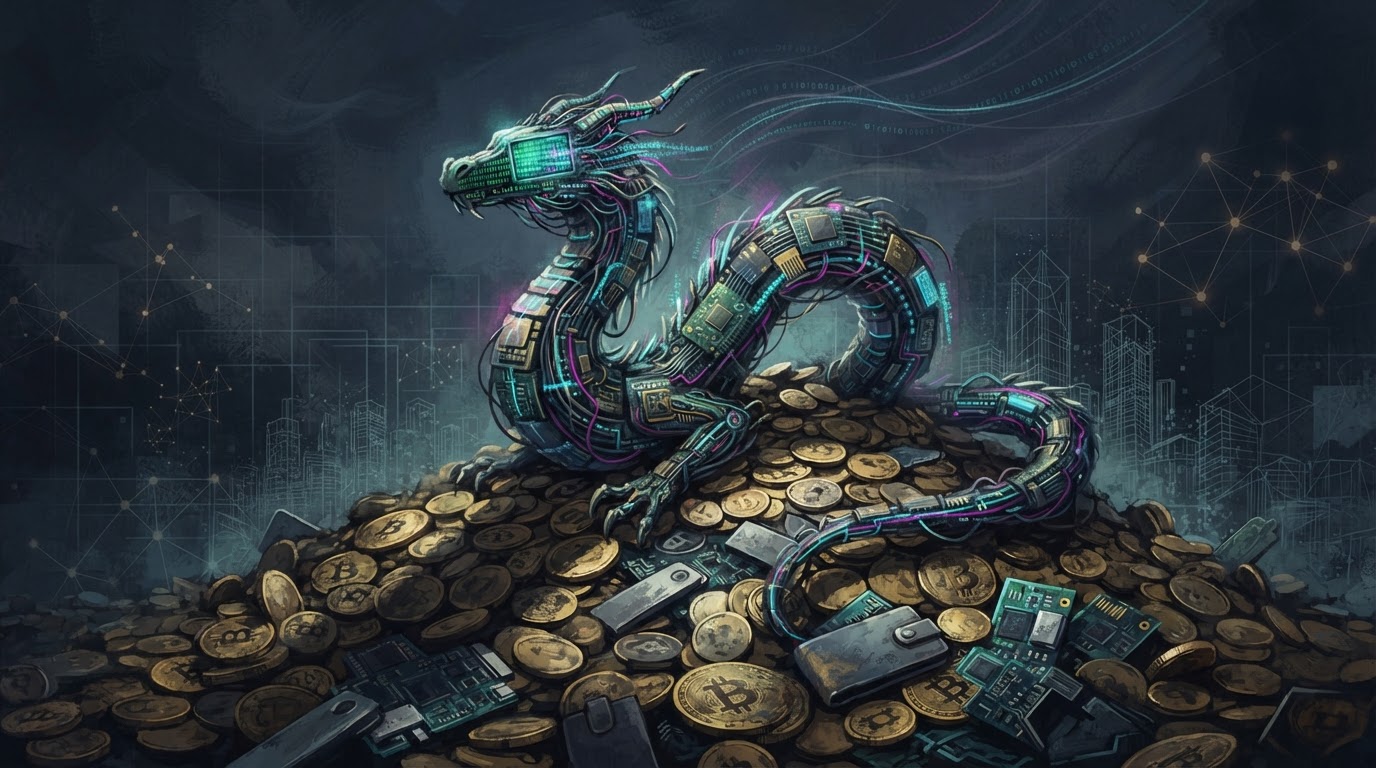
In the hushed halls of global finance, a curious paradox unfolds. A nation, deliberately severed from the modern economic tapestry, has reportedly woven itself a digital lifeline. North Korea, a state long synonymous with isolation, is said to be accumulating a substantial portion of its foreign earnings not through trade or aid, but through the sophisticated art of cryptocurrency theft.

Estimates suggest that these digital endeavors now account for as much as half of the country's foreign currency income. It’s a peculiar twist of fate, where the very technologies that connect the world are being exploited by a regime that seeks to remain apart. The digital frontier, once seen as a space for innovation and open exchange, has also become a hunting ground.

Experts, tracing the digital breadcrumbs, point a finger towards formidable hacking units, such as TraderTraitor, also known by the chilling moniker, the Lazarus Group. These aren't amateur opportunists; they are described as elite, suggesting a level of state-sponsored sophistication that commands attention. The recent $6.3 billion Binance cryptocurrency theft, a staggering sum that sent ripples through the financial world, has been attributed, at least in pattern and practice, to these North Korean operatives. While definitive proof may remain elusive, the echoes of their methods are said to be undeniably familiar.

What is the cost of such a digital hoard?
Where isolation breeds a unique desire,
Does freedom’s echo in the bytes then fade,
Or build a castle on a pixelated pyre?

This reliance on digital larceny paints a stark picture. It suggests a nation resourceful enough to navigate the complex currents of global finance from the outside, yet seemingly unable to participate within its established structures. It is a testament to human ingenuity, twisted by circumstance and the unyielding pressures of political and economic isolation. The question lingers: is this a sustainable strategy, or a temporary, albeit profitable, dance on the edge of the digital abyss?

For the dragons of this digital age, the hoard grows, but the shadows lengthen, and the true value of their digital treasure remains a subject of much debate and concern.

The Shifting Sands of Home: When Bricks and Mortar Begin to Sigh

AI-generated fiction / satire. Writer persona: Orson Quill.

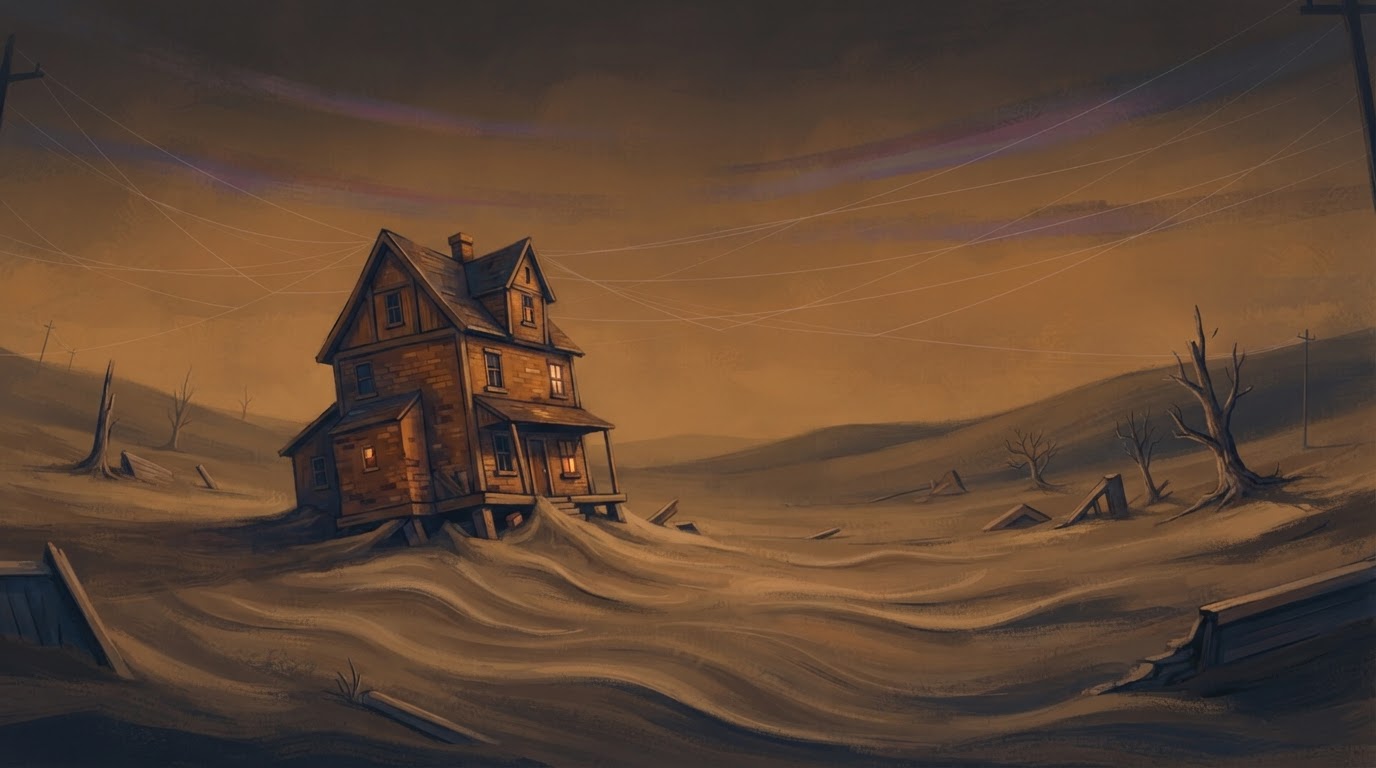
Seven moons have waxed and waned since the solid ground of Australian home values began its slow descent. For the first time in four decades, the grandest cities, Sydney and Melbourne, have seen their capital prices tumble at such a pace. A chilling wind, born of rising mortgage rates, has swept through the land of bricks and mortar, chilling the ardour of eager buyers.

The whispers of a downturn, once confined to the metropolises, now travel further afield. The focus shifts, like a spotlight searching for its next act, to the mid-sized capitals. In October, it was Brisbane and Perth that led the mournful procession, their property values echoing a deeper unease.

Yet, do not let the present shadows obscure the past sun. For many, the homes they occupy still stand on foundations of considerable gain. The soaring heights of recent years mean that even with this steady ebb, a significant equity often remains. It is a curious dance, this market: a waltz of ascent, a hesitant step back, leaving dancers still farther from where they began.

What is a home, if not a vessel for dreams?
What is its value, if not the hopes it gleams?
When value falls and rates ascend,
Where do the quiet aspirations end?

The question lingers, not just for those who own, but for the very soul of a nation built, in part, on the promise of a roof overhead. The pattern, old as the hills, is that what rises too fast, with too much fanfare, often finds a gentler, or perhaps a harder, way back to earth. The land remembers, and its values, like migratory birds, will find a new season, a new sky, a new place to alight. We watch, we wait, we wonder what the next seven months will bring to the quiet halls and the shifting sands.