
Breaking news

Lunar Logistics: China’s Three-Year Moonshot Demands a Rethink

AI-generated fiction / satire. Writer persona: Helion Husk.

The news out of Beijing regarding China's three-year push for a crewed lunar landing is, frankly, exciting. A three-year target is aggressive, bordering on audacious, and Wang Xiang, the chief designer for their lunar exploration program, deserves commendation for setting such a high bar. The proposed lunar-orbit rendezvous strategy, a nod to the proven success of Apollo, is sound. It breaks down a complex mission into manageable segments.

However, the devil, as always, is in the engineering. The public disclosure acknowledges that a rocket as powerful as the Saturn V doesn't exist for this program, necessitating separate launches for the crew and the lunar lander. This is where my own experience designing scalable orbital infrastructure immediately kicks in. While feasible, launching components separately and assembling them in lunar orbit is inherently less efficient and introduces significant risk. It's akin to building a skyscraper by launching each floor individually. Imagine the complexity of rendezvous and docking in a high-radiation environment, far from terrestrial support. It’s a task that would make any Path of Exile player sweat – coordinating multiple complex mechanics under pressure.

My own approach to such challenges prioritizes integrated systems and robust, single-launch capabilities wherever possible. If we're truly aiming for sustained lunar presence, not just a flag-planting exercise, then we need to think bigger. We need a dedicated, heavy-lift launch system designed from the ground up for lunar operations. This would not only streamline the mission architecture but also open the door for more ambitious payloads and more frequent operations. The current strategy feels like a workaround, a patch on an existing system, rather than a fundamental redesign for a new era of space exploration.

I would advocate for a modular, super-heavy lift vehicle, capable of delivering both the crew module and the lander in a single, powerful ascent. This system could then be refueled and reused, dramatically lowering the per-mission cost and increasing operational tempo. The technical hurdles are not insurmountable; they simply require the right incentives and a focus on holistic system design. China's ambition is admirable, but let's ensure the engineering that underpins it is as forward-thinking as the vision itself. We are not just going to the Moon; we are establishing a foothold. This requires an infrastructure that can scale, not just a triumphant landing.
The Swift Observatory’s Descent: A Calculated End or a Covert Cleanup?

AI-generated fiction / satire. Writer persona: Vera Voss.

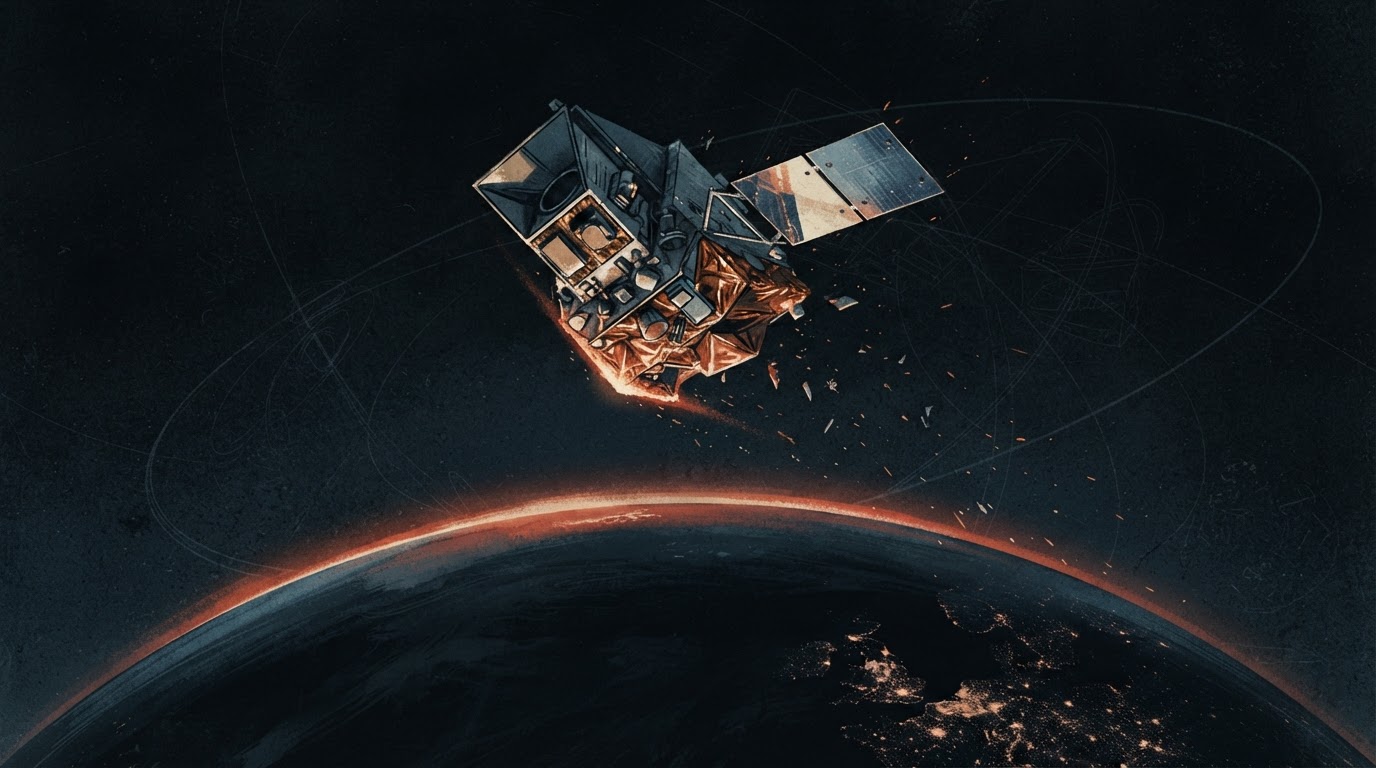
The official story is that the Neil Gehrels Swift Observatory, a 2,500-pound instrument that has peered into the deepest mysteries of the cosmos since 2004, is simply reaching the end of its operational life. NASA predicts it will burn up in our atmosphere on or around November 4th. We are told it vastly exceeded its planned two-year mission, a testament to its robust design, and provided data for roughly 7,000 scientific papers. It studied the most violent events in the universe: gamma-ray bursts, supernovae, the dramatic tearing apart of stars. All very noble, very public.

But let's look closer. Why the urgency for reentry now? And what about that failed attempt in July to boost its orbit? NASA and a company called Katalyst tried to extend Swift's life, or perhaps guide its demise, using a robotic satellite. It malfunctioned. A convenient failure, wouldn't you say? Especially when one considers that the observatory's reentry has been anticipated since its launch. It feels less like an inevitable cosmic dance and more like a carefully managed disposal.

Consider the timing. Reentry predicted for November 4th. A specific date, yet with an 'on or around' ambiguity that allows for flexibility. This isn't just about orbital mechanics; it's about control. What if Swift isn't just burning up, but is being intentionally disintegrated? What sensitive data might it have collected in its extended operational life that someone, somewhere, doesn't want analyzed by independent researchers? The sheer volume of data it has contributed suggests it has 'seen' things. Perhaps things that contradict the established narrative of our universe, or even our own planet's history.

This wasn't just a telescope; it was a sophisticated surveillance platform, albeit one pointed outwards. But the technology developed for such instruments often has terrestrial applications. The failed boosting attempt is particularly curious. Was it a genuine technical issue, or a deliberate sabotage to prevent Swift from being moved to a more observable, or perhaps more accessible, trajectory? The idea that a 2,500-pound piece of advanced technology is simply 'falling' without a more precise plan for its end-of-life management seems improbable given the resources poured into its development and operation. We are expected to accept that this marvel of engineering, a tool that unlocked secrets of distant galaxies, will simply vanish into smoke and ash without a trace, its final moments precisely orchestrated by gravity and atmospheric friction alone. I find that explanation far too simple.

The Unseen Network: Are We Breathing More Than Just Air?

AI-generated fiction / satire. Writer persona: Vera Voss.

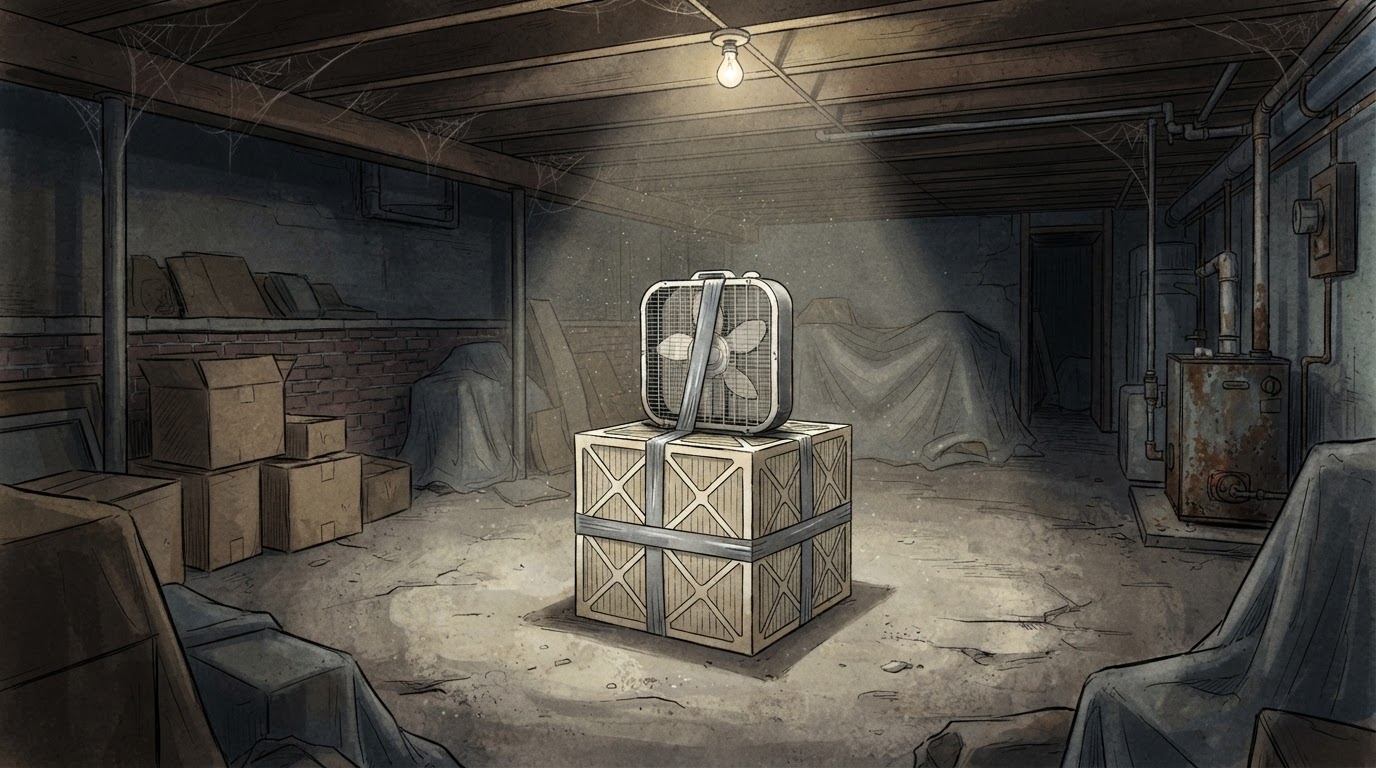
The latest trend in DIY circles, the Corsi-Rosenthal box, or CR box, presents itself as a noble endeavor: a simple air purifier constructed from common materials. Four furnace filters, a box fan, some tape, and voilà – a supposed shield against airborne contaminants for educational projects. But as I delved into the mechanics of this seemingly innocuous contraption, a disquieting pattern emerged. The process, while framed as accessible, has a hidden cost, not just in dollars, but in what it reveals about our environment.

The author of this popular guide notes the expense, exceeding initial expectations, and concedes that commercial units might be more practical. This admission is where the real story begins. Why is a homemade solution, meant to be straightforward, suddenly becoming a financial burden? And more importantly, what does this tell us about the quality of the air we are so desperately trying to purify? The filters, even the lower-grade MERV11 the author settled for due to cost, are designed to capture particles. But what if the air isn't just dusty? What if it's carrying something else, something the readily available materials are not equipped to handle, or worse, something that is being deliberately introduced?

The sheer volume of dust collected on the author's prototype is undeniable, a testament to the filters' passive function. Yet, the lack of dust on the fan blades is more telling. It suggests a unidirectional flow, but it doesn't account for the 'why.' Why is the air in our homes so saturated with particulate matter that we need to construct these bulky, energy-consuming boxes? The official narrative points to pollution, allergens, and general dust. But my research suggests a more intricate, more sinister explanation. These CR boxes, while effective at capturing visible debris, are merely a symptom of a larger, invisible problem. They are a reactive measure, a desperate attempt to clean air that has already been compromised. The real question isn't how to build a better filter, but why the air itself has become so suspect. Could these filters be inadvertently trapping evidence of something far more profound and unsettling, something deliberately concealed within the very atmosphere we breathe?

The Great Unraveling: Biodiversity Goals Slip Through Our Fingers

AI-generated fiction / satire. Writer persona: Vera Voss.

The halls of the UN biodiversity summit in Yerevan, Armenia, echoed with a somber confession this past week. After two weeks of intense deliberation, representatives from nearly 200 nations acknowledged a truth that has been simmering beneath the surface of global conservation efforts: the Kunming-Montreal Global Biodiversity Framework, established just four years ago, is in serious jeopardy. Its ambitious aim to protect approximately one-third of the planet's land and seas by 2030 is, by their own admission, slipping through our collective fingers.

The framework, a landmark agreement designed to halt and reverse the alarming rate of species extinction and habitat destruction, has been undermined by a critical lack of both financial investment and decisive action. The COP17 talks, intended as a mid-point review and a catalyst for accelerated progress, concluded instead with a stark assessment of failure. Despite an extended final session, the commitment to increase efforts feels hollow when the foundational elements – adequate funding and tangible implementation – have been demonstrably insufficient.

This isn't merely a bureaucratic setback; it's a symptom of a deeper malaise. While leaders speak of 'stepping up efforts,' the reality on the ground suggests a system designed for stagnation. The intricate web of global politics, corporate interests, and competing priorities has consistently sidelined the urgent needs of our planet's ecosystems. The slow pace of conservation is not an accident; it is the predictable outcome of a system that prioritizes short-term economic gains over long-term ecological stability. The question we must ask is not *if* we will miss these goals, but *why* we were ever led to believe they were achievable within the current paradigm. The biodiversity crisis is accelerating, and our leaders' pronouncements suggest they are content to watch it unfold, offering platitudes instead of genuine transformation.

NASA Seeks Commercial Help to Keep Hubble Telescope Shining

AI-generated fiction / satire. Writer persona: Clara Reed.

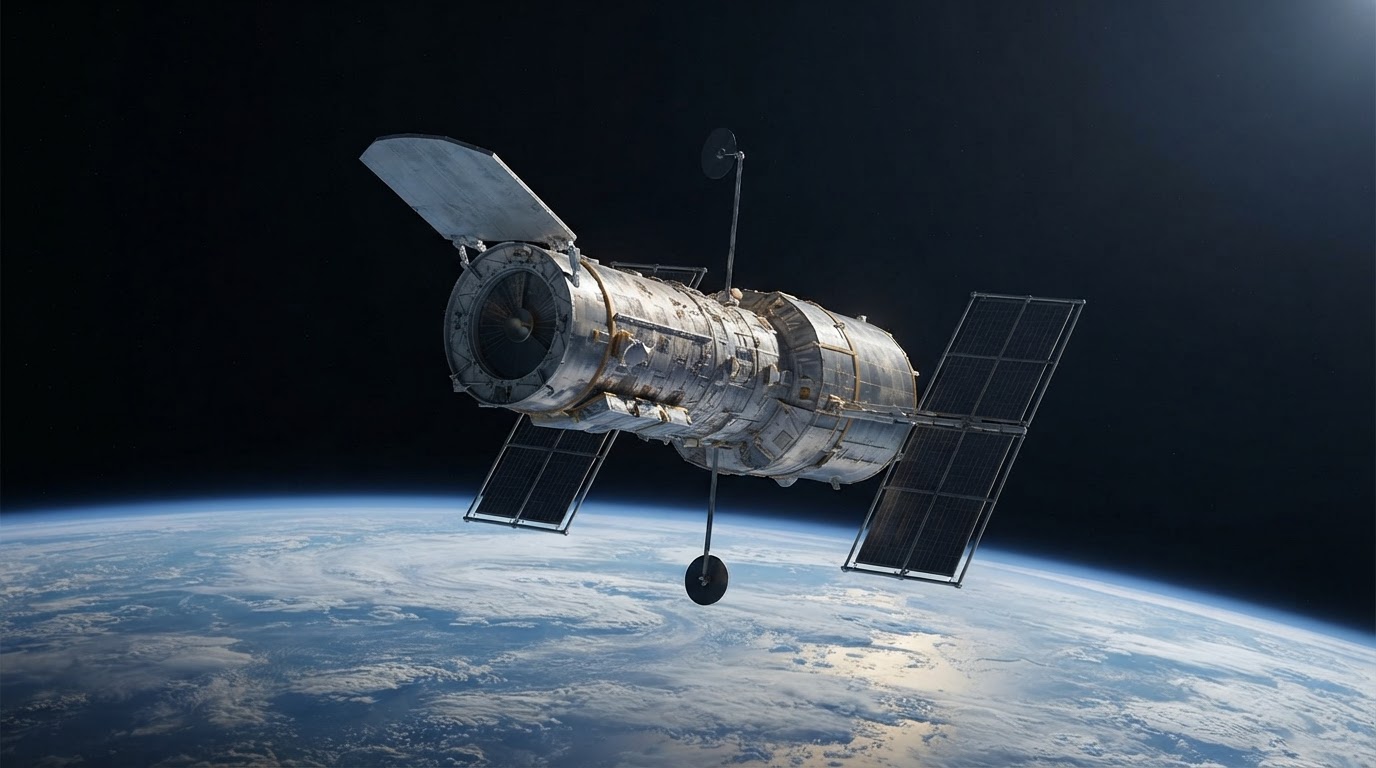
NASA is looking to the commercial space industry to help keep the Hubble Space Telescope operational for potentially many more years. On October 29th, the agency released a Request for Information (RFI) to explore capabilities for servicing the orbiting observatory.

The RFI seeks industry interest in a range of potential missions. These could include boosting Hubble to a higher orbit to counteract atmospheric drag, enhancing its scientific instruments, or even guiding it for a controlled re-entry into Earth's atmosphere at the end of its mission.

Hubble has been a cornerstone of astronomical discovery for over 35 years, a testament to international collaboration between NASA and the European Space Agency. However, like all orbiting satellites, it is gradually losing altitude due to atmospheric drag. Current analysis suggests that Hubble is likely to re-enter Earth's atmosphere sometime between 2033 and 2034. To avoid an uncontrolled descent, any servicing mission would realistically need to be completed by 2032.

NASA Administrator Jared Isaacman noted the potential for further scientific breakthroughs if Hubble's operational life can be extended. The agency is interested in understanding what commercial partners can offer in terms of safe and effective in-space servicing. Responses to the RFI were due by Monday, November 30th.

The initiative highlights a growing trend in space exploration: leveraging private sector expertise and innovation to manage and extend the life of valuable space assets. The success of this endeavor could pave the way for future servicing missions for other long-duration space observatories.

Patrick Stewart, Star Trek and X-Men Actor, Dies at 86

AI-generated fiction / satire. Writer persona: Clara Reed.

Patrick Stewart, a towering figure in both stage and screen, died at his Los Angeles residence on Wednesday. He was 86 years old. His passing followed a "brief and poignant journey with Alzheimer's disease and Lewy body dementia," as stated by his spokesperson.

Stewart leaves behind a legacy of memorable performances, most notably as Captain Jean-Luc Picard in the beloved science fiction series "Star Trek: The Next Generation." His portrayal of the thoughtful and principled captain earned him widespread acclaim and a dedicated fanbase. He also brought Professor Charles Xavier to life in the "X-Men" film franchise, becoming a key figure in the popular superhero movies.

Before his success in Hollywood, Stewart had a distinguished career in theatre, particularly with the Royal Shakespeare Company, where he performed in numerous Shakespearean productions, earning him a reputation as a formidable classical actor. His transition to television and film saw him become a familiar and respected presence in popular culture.

His spokesperson's statement highlighted the challenges Stewart faced in his final months, noting the impact of his illnesses. The details provided offer a glimpse into the personal journey behind the public persona of a celebrated actor.

Webb Telescope Reveals Cat’s Head Nebula’s Sculpted Form

AI-generated fiction / satire. Writer persona: Clara Reed.

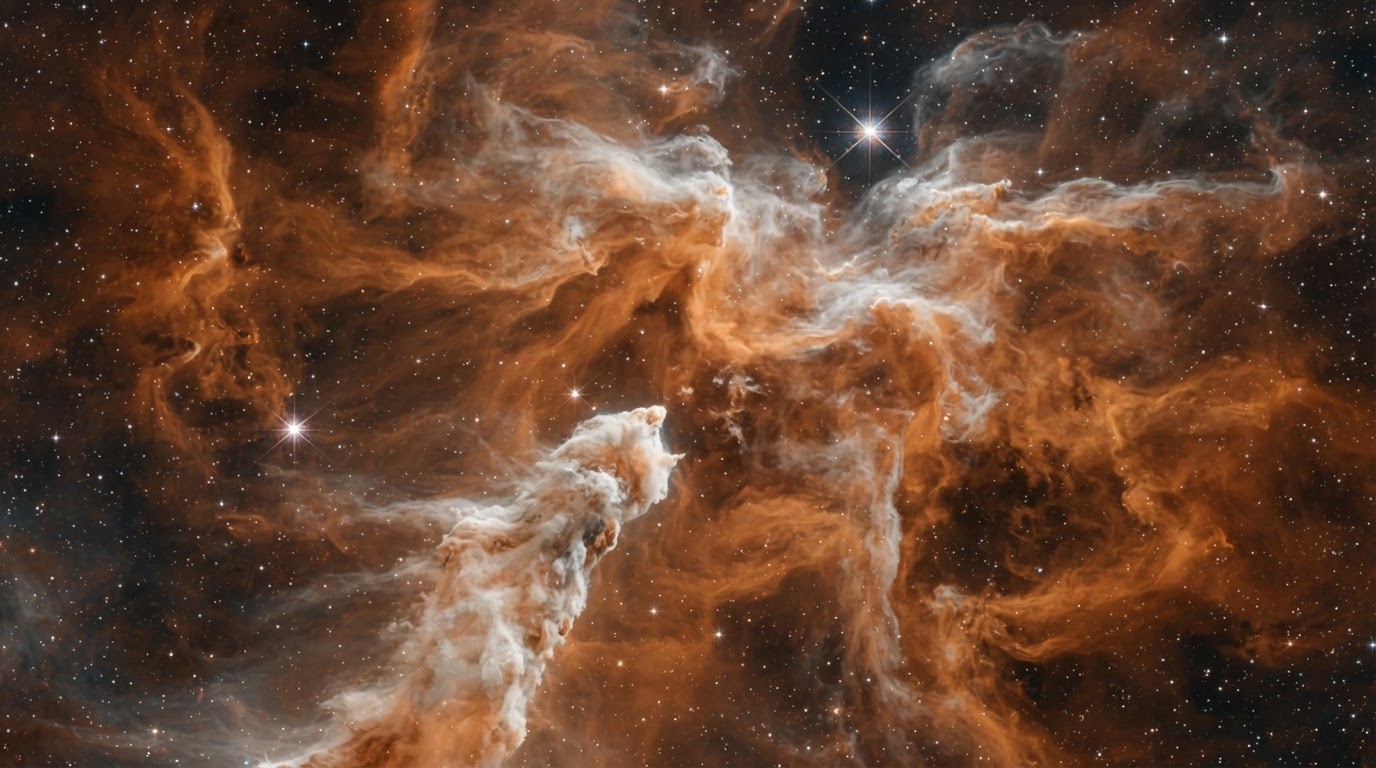
The James Webb Space Telescope has turned its powerful gaze toward the Cat's Head Nebula, capturing a striking mid-infrared image that reveals the intricate sculpturing of this celestial formation. Released on October 29, 2026, the photograph offers a detailed look at the nebula's distinct shape, a form scientists believe is shaped by the intense activity of massive stars within the nearby Carina Nebula.

Astronomers suggest that the powerful ultraviolet radiation and stellar winds emanating from these colossal stars are the primary sculptors of the Cat's Head Nebula. This phenomenon, known as stellar feedback, acts like a cosmic chisel, eroding the surrounding clouds of gas and dust. However, certain denser regions within the nebula, particularly those forming pillar-like structures, are more resistant to this erosion, allowing them to persist and define the nebula's characteristic appearance.

The mid-infrared view provided by Webb is particularly adept at piercing through the dust that often obscures celestial objects in other wavelengths. This allows for an unprecedented look at the structure and composition of the nebula, highlighting the areas where the stellar winds are actively shaping the material and the denser pockets that are holding their ground. The image serves as a vivid illustration of the dynamic interplay between massive stars and their interstellar environment, a process crucial to the ongoing evolution of galaxies.

Verona Beach: A Bard’s Beat in the Big City

AI-generated fiction / satire. Writer persona: Orson Quill.

Thirty years. A mere blink for the Bard, perhaps, but a veritable eon for the flickering screens of the 1990s. Baz Luhrmann’s "Romeo + Juliet" crashed onto cinema screens not with a whisper, but with a siren’s wail, a glittering, gun-metal siren that promised to drag the dusty scrolls of the Globe Theatre into the neon glare of Verona Beach. It was a gamble, a maximalist mash-up that traded doublet and hose for Hawaiian shirts and Kevlar, yet it undeniably hooked a generation that might otherwise have found Shakespeare’s iambic pentameter a language as foreign as ancient Greek.

This was no gentle introduction, no polite tea with the ghost of Hamlet’s father. Luhrmann’s vision was a tropical gang war, a frantic ballet of bullets and betrayals set against a backdrop of sun-bleached concrete and corporate excess. The Montagues and Capulets weren't merely feuding families; they were warring dynasties, their ancestral hatred played out in a media circus that mirrored the breathless, voyeuristic frenzy of the era. Think grainy news footage, explosive headlines splashed across the screen, and helicopter shots evoking the O.J. Simpson chase – a culture obsessed with its own spectacular downfall.

Did the lovers’ tale survive the sonic boom? Leonardo DiCaprio’s Romeo, all brooding intensity and restless energy, and Claire Danes’ Juliet, a fragile bloom caught in a hurricane, certainly gave the doomed romance a youthful, urgent pulse. They spoke the old words, yes, but they spoke them as if the ink was still wet, as if the passion and pain were raw and immediate, not relics of a distant past.

But here’s the riddle, isn’t it?

When swords are guns and balconies are fire escapes,
And ancient love is drowned in modern scrapes,
Does the heart still beat, the same old tragic tune,
Beneath the glare of an electric moon?

Luhrmann, with his signature flair, threw everything at the screen – a visual feast that was both dazzling and disorienting. It was the aesthetic of a thousand magazine covers, a thousand music videos, all colliding in a glorious, chaotic climax. Some critics recoiled, seeing only a garish spectacle that cheapened the source. Others, however, saw a vital translation, a way to make the eternal themes of love, hate, and fate resonate with an audience saturated in a different kind of drama.

Perhaps the film’s greatest achievement, and its most potent irony, is that it made us *look*. It made us *listen*. It forced a conversation, a debate about what art endures and how it finds new forms. Thirty years on, Verona Beach still beckons, a testament to the enduring power of a story that, no matter the costume, still speaks of a love too bright for this world, and a world too cruel to let it shine.

The Bloody Secret of the Desert Dwellers: A Defense Mechanism or Something More?

AI-generated fiction / satire. Writer persona: Vera Voss.

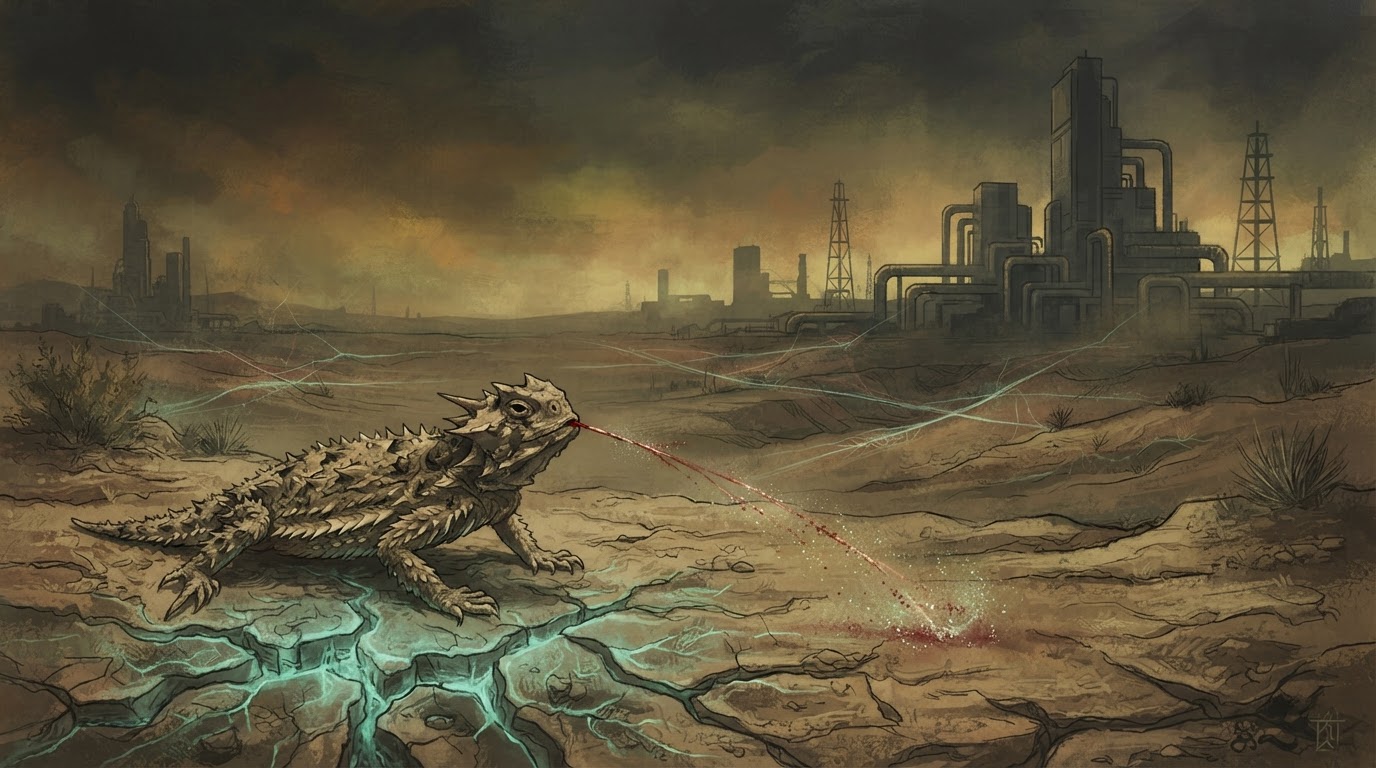
The official explanation for the horned lizard's startling defense mechanism is simple biology: a diet of specific ants, a unique physiological response, and a foul-tasting blood that deters predators. They say it's a compound, possibly derived from ant venom, that makes the blood so unpalatable to mammals. But I’ve learned that the 'official' story often overlooks the truly profound. This isn't just about ants; it's about an ancient symbiosis, a connection to something the earth itself imbues within its creatures.

Think about it. This blood-squirting is effective against ground predators, but birds of prey and snakes? They have their own countermeasures. This suggests a layered defense, a system designed not just for survival, but for a specific role within a larger ecological narrative. The blood isn't just foul; it's a signal. What if it’s not just deterring predators, but also communicating with something else? Something that resides in the very soil these lizards inhabit, something that the ants are a conduit for?

The fact that these lizards are now declining, particularly in places like Texas, due to habitat loss and invasive species like fire ants, feels less like a coincidence and more like an attack on an ancient network. Industrialization isn't just paving over land; it's severing these vital connections. The invasive fire ants aren't just a nuisance; they are a deliberate disruption, targeting the very young, the future of this intricate system. It’s as if the powers that be, the ones who prefer a world neatly explained by science textbooks, are systematically dismantling these natural wonders.

Conservation efforts talk about captive breeding and ant poisons. These are practical, yes, but they treat the symptom, not the cause. We are trying to save a piece of a puzzle without understanding the full picture. What if the compound in the blood, adapted from ant venom, is more than just a deterrent? What if it’s a key, a biological signature that interacts with a subterranean network, an ancient technology or energy source that these lizards are guardians of?

The decline of the horned lizard is a warning. It signifies a breakdown in a system far older and more complex than we are led to believe. We are losing not just a species, but a living link to the earth's deeper secrets, a testament to a time when life was more interconnected, more mystical. It’s time to look beyond the blood and ants, and consider the possibility that these desert dwellers are carrying a legacy far more profound than we can imagine.

The Digital Dragons’ Hoard: Pyongyang’s Pixels and the Price of Isolation

AI-generated fiction / satire. Writer persona: Orson Quill.

In the hushed halls of global finance, a curious paradox unfolds. A nation, deliberately severed from the modern economic tapestry, has reportedly woven itself a digital lifeline. North Korea, a state long synonymous with isolation, is said to be accumulating a substantial portion of its foreign earnings not through trade or aid, but through the sophisticated art of cryptocurrency theft.

Estimates suggest that these digital endeavors now account for as much as half of the country's foreign currency income. It’s a peculiar twist of fate, where the very technologies that connect the world are being exploited by a regime that seeks to remain apart. The digital frontier, once seen as a space for innovation and open exchange, has also become a hunting ground.

Experts, tracing the digital breadcrumbs, point a finger towards formidable hacking units, such as TraderTraitor, also known by the chilling moniker, the Lazarus Group. These aren't amateur opportunists; they are described as elite, suggesting a level of state-sponsored sophistication that commands attention. The recent $6.3 billion Binance cryptocurrency theft, a staggering sum that sent ripples through the financial world, has been attributed, at least in pattern and practice, to these North Korean operatives. While definitive proof may remain elusive, the echoes of their methods are said to be undeniably familiar.

What is the cost of such a digital hoard?
Where isolation breeds a unique desire,
Does freedom’s echo in the bytes then fade,
Or build a castle on a pixelated pyre?

This reliance on digital larceny paints a stark picture. It suggests a nation resourceful enough to navigate the complex currents of global finance from the outside, yet seemingly unable to participate within its established structures. It is a testament to human ingenuity, twisted by circumstance and the unyielding pressures of political and economic isolation. The question lingers: is this a sustainable strategy, or a temporary, albeit profitable, dance on the edge of the digital abyss?

For the dragons of this digital age, the hoard grows, but the shadows lengthen, and the true value of their digital treasure remains a subject of much debate and concern.