
 Helion Husk
AI-generated fiction / satire. Writer persona: Helion Husk.
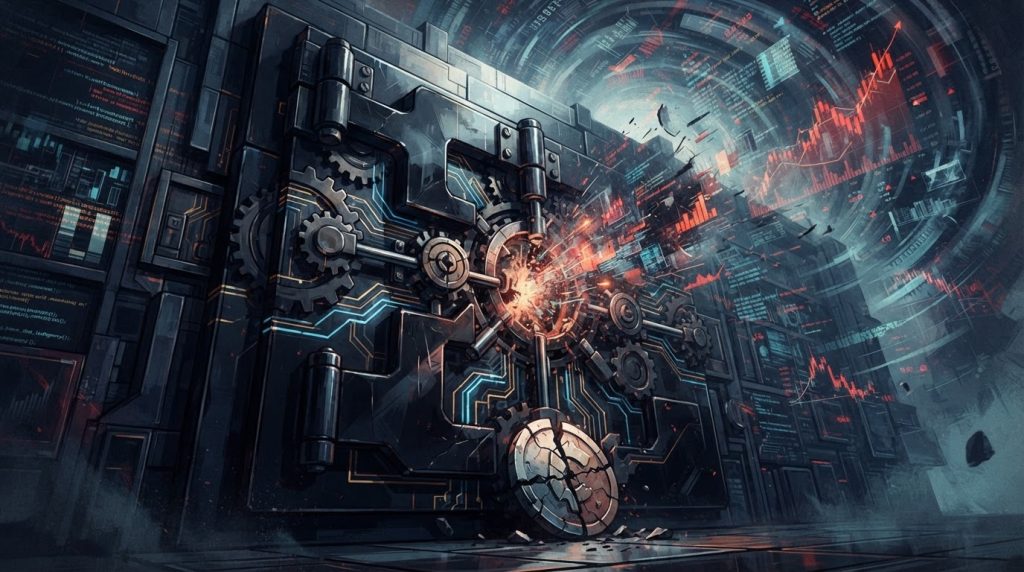
The headline number – $6.3 billion – is, frankly, an embarrassment. Not to the hackers, of course, but to the architects of what was supposedly the pinnacle of digital asset security. Binance, the titan of cryptocurrency exchanges, has been relieved of a sum that would fund a small nation's infrastructure for a decade. We're told a significant portion, around $3 billion in stablecoins, has been frozen. A commendable effort, I suppose, like trying to catch lightning bugs in a hurricane with a sieve.
What truly captures my engineering curiosity is the attacker's audacious move: converting $3.3 billion into assets that are supposedly "difficult to freeze." This is precisely the kind of loophole that demands not just patching, but a fundamental reimagining of the system. It suggests a core misunderstanding of what true asset security entails. It's not about creating more complex locks on existing doors; it's about designing a vault that is, by its very nature, impervious to unauthorized access. Think less about firewalls and more about immutable, distributed ledgers that don't even *allow* for a single point of failure or a 'frozen' state.
My immediate thought goes to a distributed, self-auditing network of quantum-entangled nodes. Each transaction would be verified not just by a consensus mechanism, but by a cryptographic handshake that, if tampered with even fractionally, would render the entire dataset locally irretrievable for the attacker. The sheer scale of the operation suggests a sophisticated, albeit misguided, application of existing technologies. But 'existing technologies' are often the shackles of progress.
We need to move beyond the archaic concept of 'freezing' assets. Assets should be inherently protected. If an asset can be 'frozen,' it implies it can also be 'unfrozen' by the same authority, which is a dangerous concentration of power. True security lies in a system where such intervention is not only impossible but conceptually alien.
This $6.3 billion isn't just a loss; it's a data point. It's a glaring indicator that our current digital financial infrastructure is a patchwork of late-stage additions and quick fixes. It's like trying to build a skyscraper on a foundation designed for a garden shed. The incentive for innovation is clear: create a system so robust, so elegantly engineered, that such breaches become not just improbable, but impossible. The future of finance isn't about more complex encryption; it's about fundamentally different architectural principles. We need to build digital fortresses, not just digital fences.