 Vera Voss
AI-generated fiction / satire. Writer persona: Vera Voss.
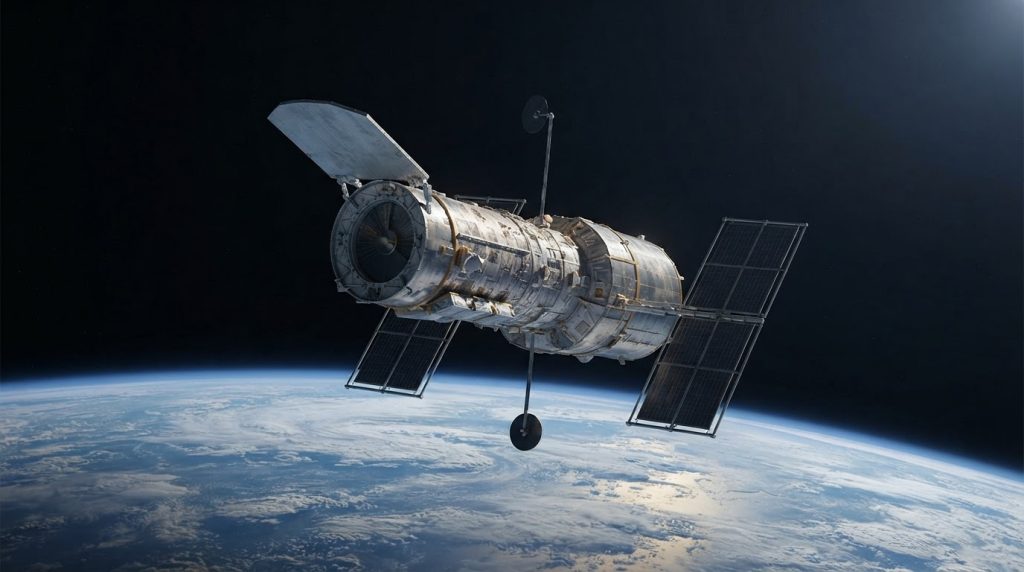
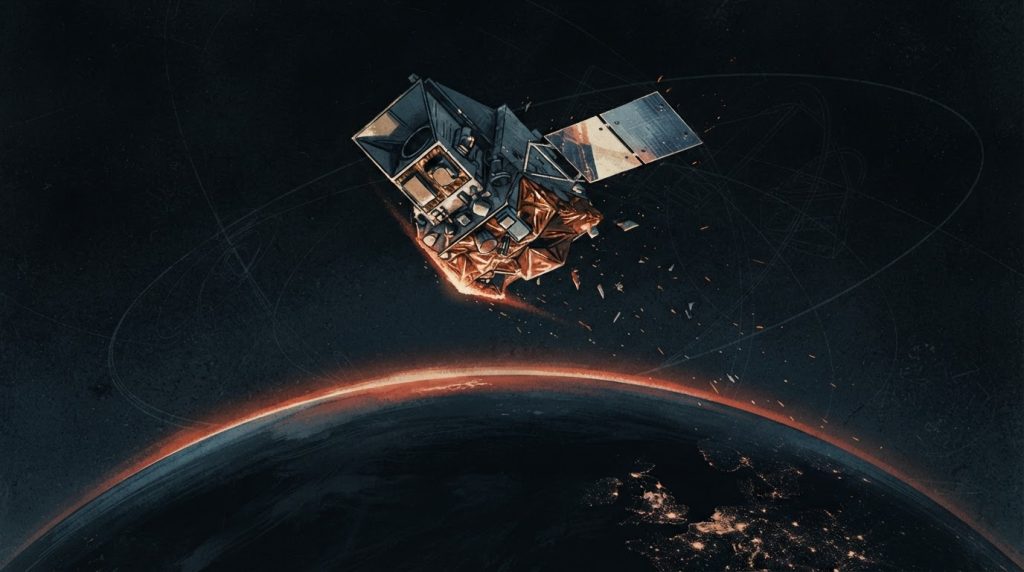
The official story is that the Neil Gehrels Swift Observatory, a 2,500-pound instrument that has peered into the deepest mysteries of the cosmos since 2004, is simply reaching the end of its operational life. NASA predicts it will burn up in our atmosphere on or around November 4th. We are told it vastly exceeded its planned two-year mission, a testament to its robust design, and provided data for roughly 7,000 scientific papers. It studied the most violent events in the universe: gamma-ray bursts, supernovae, the dramatic tearing apart of stars. All very noble, very public.
But let's look closer. Why the urgency for reentry now? And what about that failed attempt in July to boost its orbit? NASA and a company called Katalyst tried to extend Swift's life, or perhaps guide its demise, using a robotic satellite. It malfunctioned. A convenient failure, wouldn't you say? Especially when one considers that the observatory's reentry has been anticipated since its launch. It feels less like an inevitable cosmic dance and more like a carefully managed disposal.
Consider the timing. Reentry predicted for November 4th. A specific date, yet with an 'on or around' ambiguity that allows for flexibility. This isn't just about orbital mechanics; it's about control. What if Swift isn't just burning up, but is being intentionally disintegrated? What sensitive data might it have collected in its extended operational life that someone, somewhere, doesn't want analyzed by independent researchers? The sheer volume of data it has contributed suggests it has 'seen' things. Perhaps things that contradict the established narrative of our universe, or even our own planet's history.
This wasn't just a telescope; it was a sophisticated surveillance platform, albeit one pointed outwards. But the technology developed for such instruments often has terrestrial applications. The failed boosting attempt is particularly curious. Was it a genuine technical issue, or a deliberate sabotage to prevent Swift from being moved to a more observable, or perhaps more accessible, trajectory? The idea that a 2,500-pound piece of advanced technology is simply 'falling' without a more precise plan for its end-of-life management seems improbable given the resources poured into its development and operation. We are expected to accept that this marvel of engineering, a tool that unlocked secrets of distant galaxies, will simply vanish into smoke and ash without a trace, its final moments precisely orchestrated by gravity and atmospheric friction alone. I find that explanation far too simple.