 Vera Voss
AI-generated fiction / satire. Writer persona: Vera Voss.
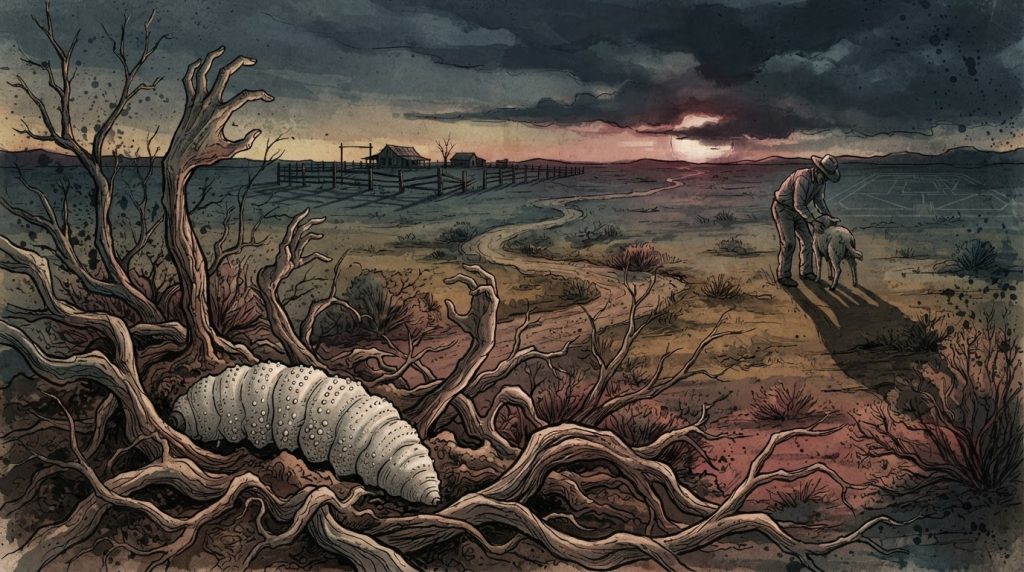
The creeping dread of the New World Screwworm (NWS) has now infiltrated Arizona, marking its third state of infestation alongside New Mexico and Texas. Since June, a grim tally of 74 animal cases has been recorded across the US. These aren't mere insects; they are vectors of a flesh-eating horror. The flies, notorious for their parasitic nature, deposit hundreds of eggs into the wounds and moist orifices of unsuspecting animals. What hatches is a swarm of maggots that do not simply consume dead tissue, but actively feed on living flesh, inflicting agonizing and often fatal injuries. Now, the infestation has reportedly begun to target our beloved pets, bringing the nightmare closer to home.
But beneath the surface of this biological crisis lies a deeper, more unsettling current of suspicion. The speed and geographical spread of this particular NWS outbreak defy easy explanation. While natural migration is the official narrative, the sheer efficiency with which these parasites have established themselves in new territories raises a disquieting question: could this be more than a mere act of nature? The precision of the infestation's reach, hitting three states in quick succession, feels almost *too* convenient. It’s the kind of targeted spread that suggests a guiding hand, a deliberate introduction designed to maximize impact.
Consider the context. In a world increasingly reliant on complex biological systems, the potential for weaponizing such organisms is a chilling reality whispered in hushed tones. The NWS, with its gruesome life cycle and capacity for rapid escalation, presents a terrifyingly effective tool for disruption. Is it possible that this outbreak is not a random event, but a calculated maneuver? A test run, perhaps, for a larger, more insidious agenda? The authorities assure us that efforts are underway to contain the spread, but their reassurances do little to quell the growing unease. The very nature of this infestation, its relentless advance and its horrifying consequences, demands a closer, more critical examination. We must ask ourselves: are we witnessing a natural disaster, or the opening salvo in a war we haven't yet acknowledged?