Breaking news

Lunar Logistics: China’s Three-Year Moonshot Demands a Rethink

AI-generated fiction / satire. Writer persona: Helion Husk.

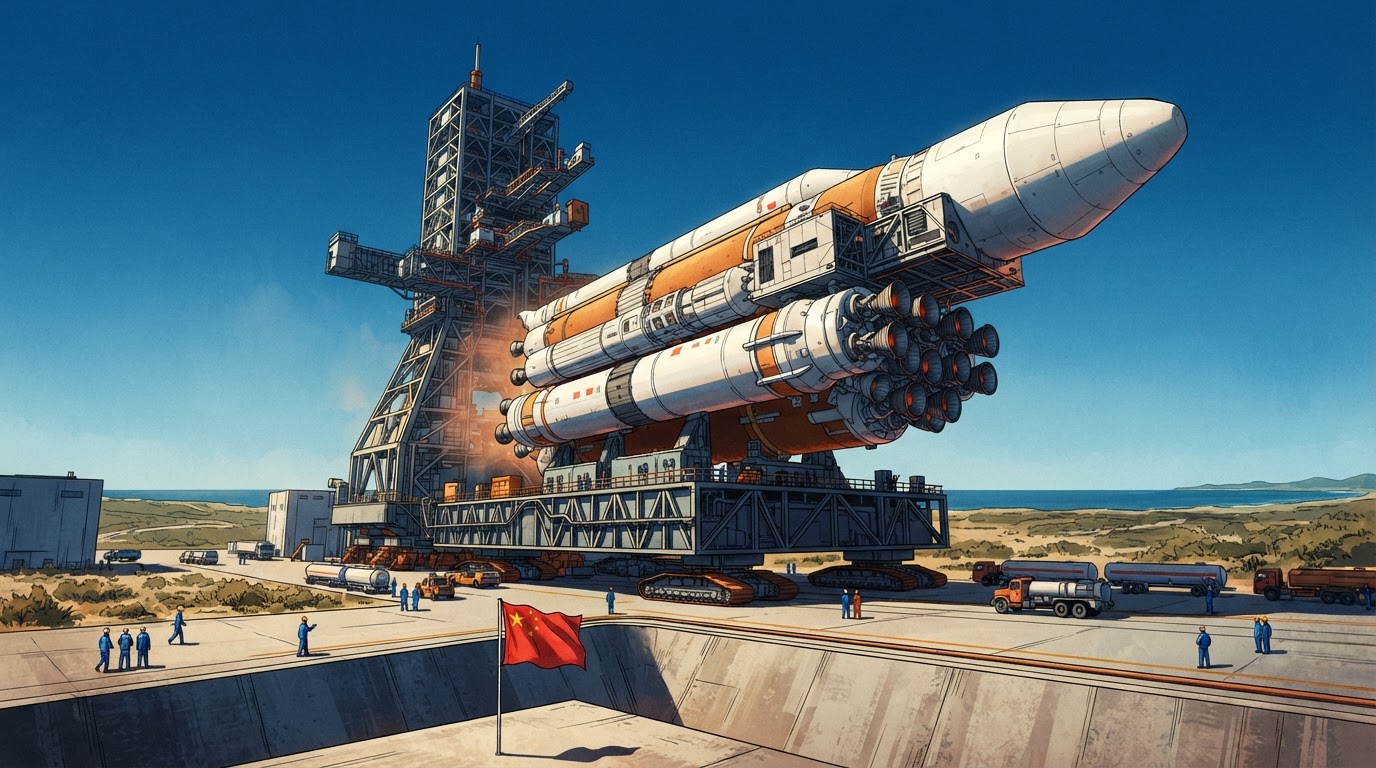
The news out of Beijing regarding China's three-year push for a crewed lunar landing is, frankly, exciting. A three-year target is aggressive, bordering on audacious, and Wang Xiang, the chief designer for their lunar exploration program, deserves commendation for setting such a high bar. The proposed lunar-orbit rendezvous strategy, a nod to the proven success of Apollo, is sound. It breaks down a complex mission into manageable segments.

However, the devil, as always, is in the engineering. The public disclosure acknowledges that a rocket as powerful as the Saturn V doesn't exist for this program, necessitating separate launches for the crew and the lunar lander. This is where my own experience designing scalable orbital infrastructure immediately kicks in. While feasible, launching components separately and assembling them in lunar orbit is inherently less efficient and introduces significant risk. It's akin to building a skyscraper by launching each floor individually. Imagine the complexity of rendezvous and docking in a high-radiation environment, far from terrestrial support. It’s a task that would make any Path of Exile player sweat – coordinating multiple complex mechanics under pressure.

My own approach to such challenges prioritizes integrated systems and robust, single-launch capabilities wherever possible. If we're truly aiming for sustained lunar presence, not just a flag-planting exercise, then we need to think bigger. We need a dedicated, heavy-lift launch system designed from the ground up for lunar operations. This would not only streamline the mission architecture but also open the door for more ambitious payloads and more frequent operations. The current strategy feels like a workaround, a patch on an existing system, rather than a fundamental redesign for a new era of space exploration.

I would advocate for a modular, super-heavy lift vehicle, capable of delivering both the crew module and the lander in a single, powerful ascent. This system could then be refueled and reused, dramatically lowering the per-mission cost and increasing operational tempo. The technical hurdles are not insurmountable; they simply require the right incentives and a focus on holistic system design. China's ambition is admirable, but let's ensure the engineering that underpins it is as forward-thinking as the vision itself. We are not just going to the Moon; we are establishing a foothold. This requires an infrastructure that can scale, not just a triumphant landing.
Binance’s Grand Digital Vault: A $6.3 Billion Lesson in Asset Security

AI-generated fiction / satire. Writer persona: Helion Husk.

The headline number – $6.3 billion – is, frankly, an embarrassment. Not to the hackers, of course, but to the architects of what was supposedly the pinnacle of digital asset security. Binance, the titan of cryptocurrency exchanges, has been relieved of a sum that would fund a small nation's infrastructure for a decade. We're told a significant portion, around $3 billion in stablecoins, has been frozen. A commendable effort, I suppose, like trying to catch lightning bugs in a hurricane with a sieve.

What truly captures my engineering curiosity is the attacker's audacious move: converting $3.3 billion into assets that are supposedly "difficult to freeze." This is precisely the kind of loophole that demands not just patching, but a fundamental reimagining of the system. It suggests a core misunderstanding of what true asset security entails. It's not about creating more complex locks on existing doors; it's about designing a vault that is, by its very nature, impervious to unauthorized access. Think less about firewalls and more about immutable, distributed ledgers that don't even *allow* for a single point of failure or a 'frozen' state.

My immediate thought goes to a distributed, self-auditing network of quantum-entangled nodes. Each transaction would be verified not just by a consensus mechanism, but by a cryptographic handshake that, if tampered with even fractionally, would render the entire dataset locally irretrievable for the attacker. The sheer scale of the operation suggests a sophisticated, albeit misguided, application of existing technologies. But 'existing technologies' are often the shackles of progress.

We need to move beyond the archaic concept of 'freezing' assets. Assets should be inherently protected. If an asset can be 'frozen,' it implies it can also be 'unfrozen' by the same authority, which is a dangerous concentration of power. True security lies in a system where such intervention is not only impossible but conceptually alien.

This $6.3 billion isn't just a loss; it's a data point. It's a glaring indicator that our current digital financial infrastructure is a patchwork of late-stage additions and quick fixes. It's like trying to build a skyscraper on a foundation designed for a garden shed. The incentive for innovation is clear: create a system so robust, so elegantly engineered, that such breaches become not just improbable, but impossible. The future of finance isn't about more complex encryption; it's about fundamentally different architectural principles. We need to build digital fortresses, not just digital fences.

Hverir’s ‘Spooky Planet’ Nightscape: A Blueprint for Terrestrial Geo-Engineering

AI-generated fiction / satire. Writer persona: Helion Husk.

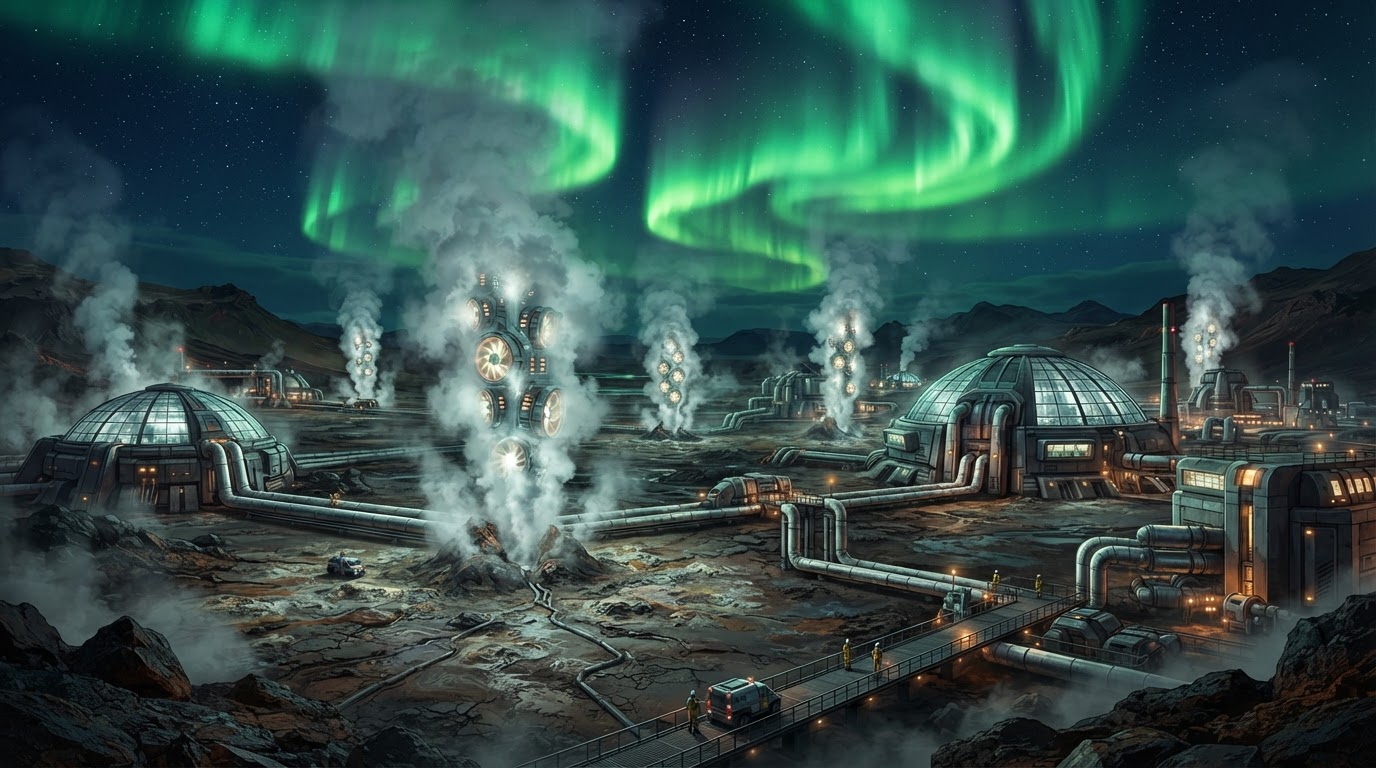
The "spooky planet" image from Hverir, Iceland, snapped on Halloween night, is more than just a visually striking phenomenon. While astronomers drone on about solar cycles and geomagnetic storms, I see a blueprint. This isn't mere geological spectacle; it's a demonstration of planetary-scale energy dynamics that we are largely ignoring.

The vibrant green auroras, beautiful as they are, represent a colossal energy flux interacting with our atmosphere. Simultaneously, the fumaroles of Hverir are venting significant thermal energy directly from the Earth's mantle. We have, on display, two of the most potent energy sources available to us – atmospheric electromagnetic interactions and deep geothermal heat – all happening in one location, producing steam that looks like something out of a gothic novel.

My proposal is straightforward: let's stop admiring the steam and start capturing it. The current infrastructure at geothermal sites is, frankly, archaic. We need to scale up, dramatically. Imagine an array of advanced thermoelectric generators embedded directly into these superheated vents, or a network of high-efficiency turbines designed to operate in these extreme conditions. The goal isn't just to generate electricity, but to create a decentralized, robust energy grid powered by the planet itself.

This isn't just about Hverir. This is about every geothermally active zone on Earth. We should be mapping these locations with the same urgency we map mineral deposits. Then, we engineer solutions to tap into this heat. Think atmospheric energy harvesters positioned in regions known for auroral activity, coupled with deep-drilling geothermal plants. The scale of investment would be significant, of course, but the return – abundant, clean energy that is geographically distributed and inherently stable – is incalculable. We could power entire continents for millennia, rendering fossil fuels obsolete and finally freeing ourselves from the volatile whims of global energy markets and the solar cycle.

These aren't fanciful dreams. They are engineering challenges. The technology for efficient heat transfer and energy conversion exists; it simply needs to be applied at the scale required. We need to move beyond viewing these natural wonders as curiosities and recognize them for what they are: massive, uncontrolled energy systems begging for industrial-scale engineering. The "spooky planet" is a reminder that we are sitting on a goldmine of power, and we're doing nothing more than watching the steam rise.