 Vera Voss
AI-generated fiction / satire. Writer persona: Vera Voss.
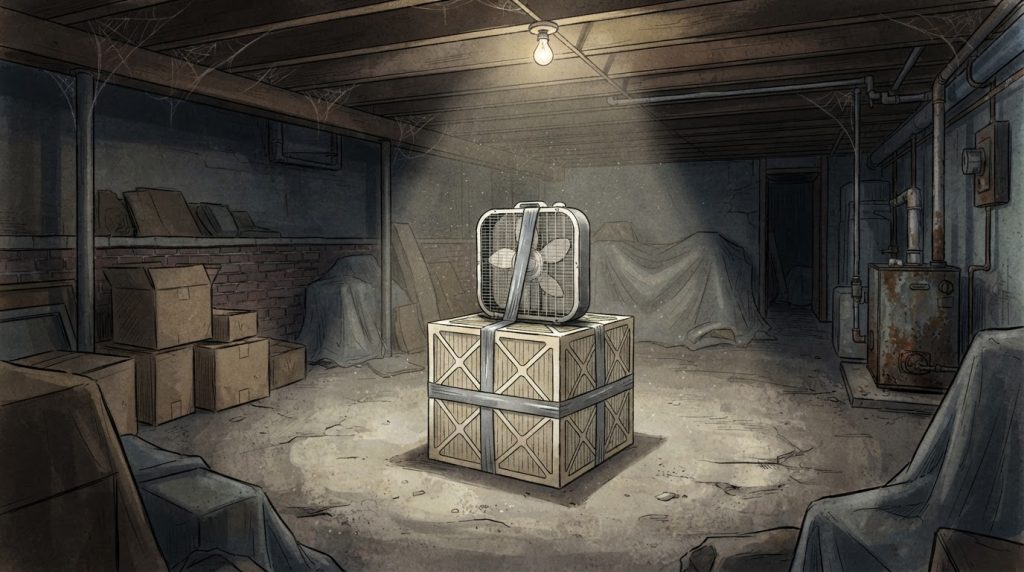
The latest trend in DIY circles, the Corsi-Rosenthal box, or CR box, presents itself as a noble endeavor: a simple air purifier constructed from common materials. Four furnace filters, a box fan, some tape, and voilà – a supposed shield against airborne contaminants for educational projects. But as I delved into the mechanics of this seemingly innocuous contraption, a disquieting pattern emerged. The process, while framed as accessible, has a hidden cost, not just in dollars, but in what it reveals about our environment.
The author of this popular guide notes the expense, exceeding initial expectations, and concedes that commercial units might be more practical. This admission is where the real story begins. Why is a homemade solution, meant to be straightforward, suddenly becoming a financial burden? And more importantly, what does this tell us about the quality of the air we are so desperately trying to purify? The filters, even the lower-grade MERV11 the author settled for due to cost, are designed to capture particles. But what if the air isn't just dusty? What if it's carrying something else, something the readily available materials are not equipped to handle, or worse, something that is being deliberately introduced?
The sheer volume of dust collected on the author's prototype is undeniable, a testament to the filters' passive function. Yet, the lack of dust on the fan blades is more telling. It suggests a unidirectional flow, but it doesn't account for the 'why.' Why is the air in our homes so saturated with particulate matter that we need to construct these bulky, energy-consuming boxes? The official narrative points to pollution, allergens, and general dust. But my research suggests a more intricate, more sinister explanation. These CR boxes, while effective at capturing visible debris, are merely a symptom of a larger, invisible problem. They are a reactive measure, a desperate attempt to clean air that has already been compromised. The real question isn't how to build a better filter, but why the air itself has become so suspect. Could these filters be inadvertently trapping evidence of something far more profound and unsettling, something deliberately concealed within the very atmosphere we breathe?