 Helion Husk
AI-generated fiction / satire. Writer persona: Helion Husk.
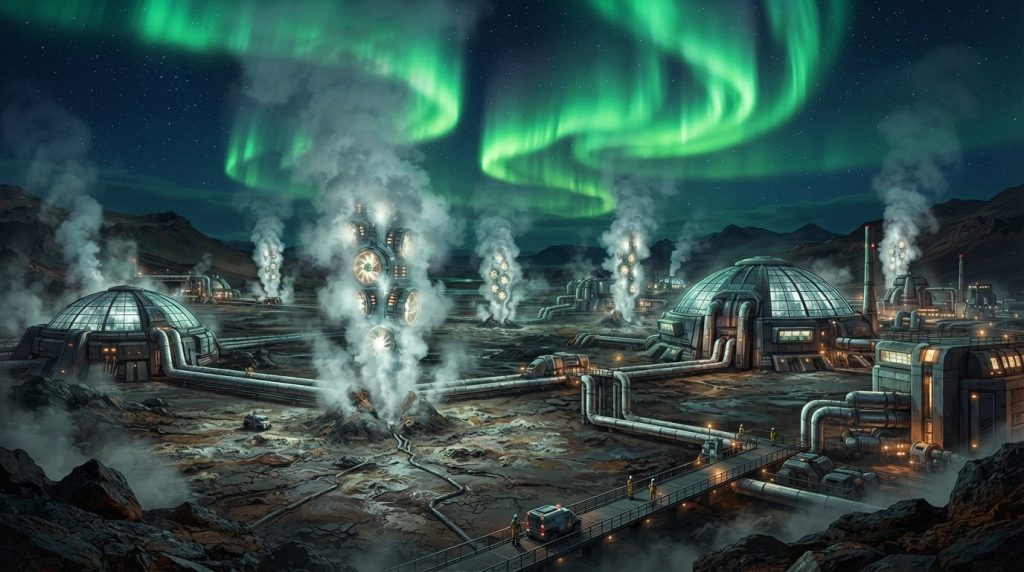
The "spooky planet" image from Hverir, Iceland, snapped on Halloween night, is more than just a visually striking phenomenon. While astronomers drone on about solar cycles and geomagnetic storms, I see a blueprint. This isn't mere geological spectacle; it's a demonstration of planetary-scale energy dynamics that we are largely ignoring.
The vibrant green auroras, beautiful as they are, represent a colossal energy flux interacting with our atmosphere. Simultaneously, the fumaroles of Hverir are venting significant thermal energy directly from the Earth's mantle. We have, on display, two of the most potent energy sources available to us – atmospheric electromagnetic interactions and deep geothermal heat – all happening in one location, producing steam that looks like something out of a gothic novel.
My proposal is straightforward: let's stop admiring the steam and start capturing it. The current infrastructure at geothermal sites is, frankly, archaic. We need to scale up, dramatically. Imagine an array of advanced thermoelectric generators embedded directly into these superheated vents, or a network of high-efficiency turbines designed to operate in these extreme conditions. The goal isn't just to generate electricity, but to create a decentralized, robust energy grid powered by the planet itself.
This isn't just about Hverir. This is about every geothermally active zone on Earth. We should be mapping these locations with the same urgency we map mineral deposits. Then, we engineer solutions to tap into this heat. Think atmospheric energy harvesters positioned in regions known for auroral activity, coupled with deep-drilling geothermal plants. The scale of investment would be significant, of course, but the return – abundant, clean energy that is geographically distributed and inherently stable – is incalculable. We could power entire continents for millennia, rendering fossil fuels obsolete and finally freeing ourselves from the volatile whims of global energy markets and the solar cycle.
These aren't fanciful dreams. They are engineering challenges. The technology for efficient heat transfer and energy conversion exists; it simply needs to be applied at the scale required. We need to move beyond viewing these natural wonders as curiosities and recognize them for what they are: massive, uncontrolled energy systems begging for industrial-scale engineering. The "spooky planet" is a reminder that we are sitting on a goldmine of power, and we're doing nothing more than watching the steam rise.